Pre Rolls
What’s Inside a Blunt? Breaking Down the Ingredients

Jul
A blunt may look simple from the outside, but what you inhale depends on more than the cannabis packed into it. The flower, wrapper, added concentrates, flavorings, and even leftover cigar tobacco can all change the experience.
That is why questions such as “what’s in a blunt,” “do blunts have tobacco,” and “do blunts have nicotine” do not always have a one-word answer.
A traditional blunt usually contains ground cannabis wrapped in a tobacco-based cigar or cigarillo leaf. Even when the loose tobacco inside the cigar has been removed, the outer wrapper may still contain tobacco and nicotine. Newer products marketed as hemp wraps, palm wraps, or tobacco-free blunt wraps may not contain nicotine, but you need to check the packaging to know for sure.
Cannabis flower itself does not naturally contain nicotine in the way tobacco does. However, smoking cannabis in a tobacco-based wrapper can expose you to nicotine along with tetrahydrocannabinol, better known as THC.
This guide explains exactly what may be inside a blunt, how it differs from a joint or spliff, and what to consider before choosing a wrap.
What Is a Blunt?
A blunt is cannabis rolled inside a cigar wrapper, cigarillo wrapper, or a separate blunt-style wrap.
Traditionally, someone makes a blunt by cutting open a cigar or cigarillo, removing most or all of its tobacco filling, and replacing it with ground cannabis. The remaining cigar shell is then resealed and smoked.
The Centers for Disease Control and Prevention defines a cigar as a roll of tobacco wrapped in leaf tobacco or another substance containing tobacco. This distinction matters because the wrapper itself can remain a tobacco product even after the loose cigar tobacco has been removed.
Not every modern blunt follows that traditional definition. Some are made with:
- Hemp-based wraps
- Palm leaves
- Banana leaves
- Other plant-fiber wraps
- Pre-rolled cones designed to resemble blunts
- Tobacco-free wraps made from cellulose or botanical materials
These alternatives may offer the size and slow-burning style associated with a blunt without using a tobacco leaf. However, ingredients vary by manufacturer, so “blunt wrap” does not automatically mean tobacco-free.
What’s in a Blunt?
The most basic answer is that a blunt contains cannabis flower and a wrapper. Depending on how it is prepared, it may also include tobacco residue, nicotine, concentrates, flavorings, or a filter tip.
Here is a closer look at each possible component.
Cannabis Flower
Cannabis flower refers to the dried, harvested buds of the cannabis plant. It is the main ingredient inside most blunts.
Flower naturally contains compounds called cannabinoids. These include THC, which is primarily responsible for cannabis intoxication, and cannabidiol, or CBD, which is not intoxicating in the same way.
Cannabis also contains terpenes. Terpenes are aromatic compounds that contribute to a strain’s scent and flavor. Common cannabis terpenes may produce citrus, pine, herbal, floral, peppery, or earthy aromas.
The flower may be broken apart by hand or with a grinder before being placed inside the wrapper. An even grind can help a blunt burn more consistently, although grinding flower too finely may restrict airflow.
The amount of cannabis used varies considerably. Blunts are generally larger than joints and may contain more flower, but there is no standardized blunt size.
The Wrapper
The wrapper is one of the most important ingredients because it determines whether the blunt contains tobacco.
A traditional blunt wrapper comes from a cigar or cigarillo. It may be made from natural tobacco leaf, reconstituted tobacco, or paper containing tobacco fibers.
Reconstituted tobacco is processed material made by combining tobacco particles, stems, scraps, or other tobacco components into a sheet. Although it may look more uniform than a natural leaf, it is still tobacco-based.
A tobacco wrapper can affect:
- Flavor
- Burn speed
- Harshness
- Nicotine exposure
- Aroma
- Moisture
- Smoke volume
Some wraps are flavored with sweeteners or aromatic additives. These may change the taste, but they do not remove the health risks associated with inhaling smoke.
Possible Tobacco Residue
When a cigar is emptied, small pieces of tobacco may remain attached to the inside of the wrapper. Some people also intentionally leave a portion of the cigar filler inside.
As a result, one blunt may contain only cannabis inside a tobacco wrapper, while another may include both cannabis and loose tobacco.
This is one reason the question “do blunts have tobacco?” requires some context. A traditional cigar-based blunt generally includes tobacco in the wrapper, even when the filler has been removed. It may also contain tobacco residue or intentionally mixed tobacco.
Nicotine
If the wrapper contains tobacco, the blunt can contain nicotine.
Nicotine is a naturally occurring chemical in tobacco that can lead to dependence. The CDC describes nicotine as the addictive drug found naturally in tobacco products.
Research on cigar products has found measurable nicotine across different cigar types, including cigarillos and little cigars. Nicotine levels vary by product, wrapper construction, size, moisture, tobacco blend, and how the product is smoked.
It is therefore inaccurate to assume that removing a cigar’s loose tobacco removes all nicotine. A tobacco-based wrapper may still provide nicotine exposure.
A genuinely tobacco-free wrap should not naturally contain tobacco-derived nicotine unless nicotine has been separately added. Always examine the ingredient list and nicotine warning on the package.
Cannabis Concentrates
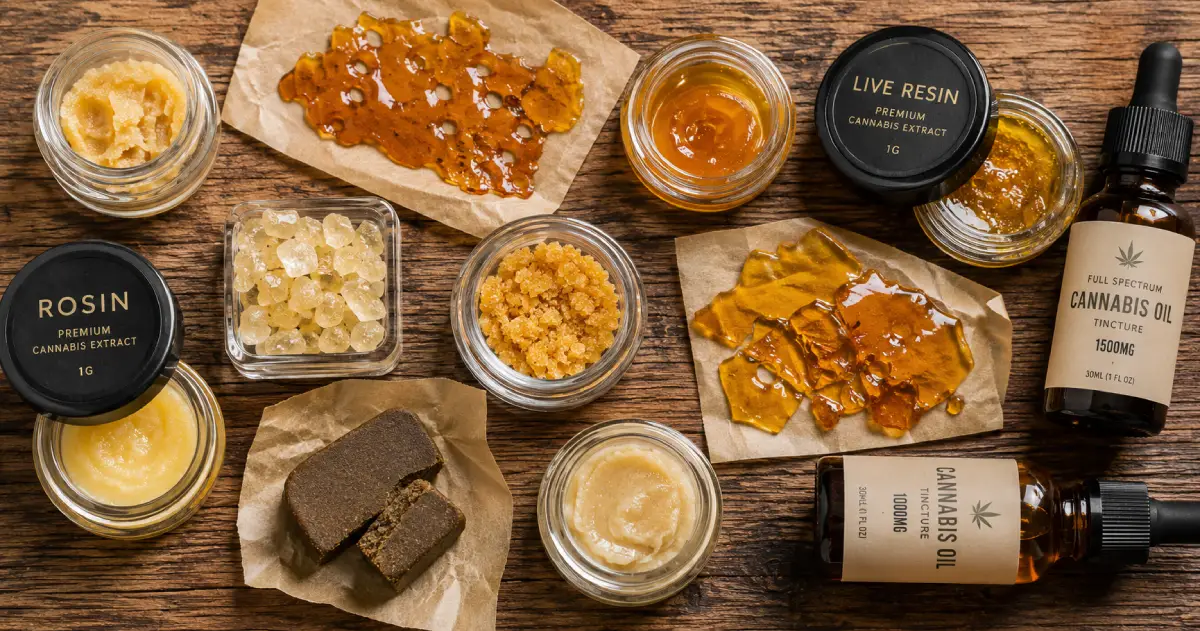
Some blunts are enhanced with cannabis concentrates.
A concentrate is a product in which cannabinoids and other cannabis compounds have been separated from plant material, creating a more concentrated preparation. Examples include:
Kief is the loose collection of trichomes that fall away from cannabis flower. Trichomes are the small resin-producing structures that contain many of the plant’s cannabinoids and terpenes.
Concentrates may be mixed into the flower, placed in a line through the center, or applied to the outside of the wrapper. Products prepared this way may be described as infused blunts.
Because concentrates can contain much higher levels of THC than standard flower, an infused blunt may feel substantially stronger. The exact potency depends on the flower, concentrate, amount used, and serving size.
Flavorings and Additives
Commercial cigarillos and blunt wraps may contain flavorings, humectants, sweeteners, adhesives, or processing additives.
A humectant is a substance that helps a product retain moisture. Moisture can make a wrap more flexible and less likely to crack while rolling.
Flavor names do not tell you whether a wrap contains tobacco. A fruit-flavored cigar wrap may still be tobacco-based, while a flavored hemp wrap may be tobacco-free.
Look for terms such as:
- Tobacco leaf
- Natural tobacco
- Reconstituted tobacco
- Homogenized tobacco leaf
- Hemp
- Palm leaf
- Cellulose
- Tobacco-free
- Nicotine-free
Do not rely only on the front of the package. Read the full label and warning statements where available.
A Filter or Tip
Some blunts include a rolled paper tip, glass tip, wooden tip, or reusable mouthpiece.
A tip can help maintain the blunt’s shape and keep pieces of flower out of your mouth. However, an open cardboard tip does not filter smoke in the same way as a specialized cigarette filter.
Even when a filtered mouthpiece is used, smoking still produces combustion byproducts. A tip should not be treated as protection against the risks of smoke exposure.
Does Weed Have Nicotine?
Cannabis flower is not considered a natural source of nicotine like tobacco.
Nicotine is strongly associated with plants in the tobacco genus, while cannabis produces cannabinoids such as THC and CBD. Standard marijuana flower does not provide the tobacco-derived nicotine found in cigarettes, cigars, cigarillos, and traditional tobacco wraps.
Therefore, when people ask, “does weed have nicotine?” the practical answer is no: unadulterated cannabis flower does not naturally contain meaningful tobacco-style nicotine.
However, a cannabis product may expose you to nicotine when it is:
- Rolled in a tobacco leaf
- Packed into a cigar or cigarillo wrapper
- Mixed with loose tobacco
- Consumed alongside a nicotine product
- Contaminated or inaccurately labeled
The source matters. Cannabis is not what typically introduces nicotine into a blunt. The tobacco wrapper or added tobacco does.
Does Marijuana Contain Nicotine?
Marijuana and tobacco are different plants with different primary active compounds.
Marijuana contains cannabinoids. Tobacco contains nicotine.
THC interacts with cannabinoid receptors in the body and can produce intoxication, altered perception, impaired coordination, changes in appetite, and other effects. Nicotine acts on nicotinic acetylcholine receptors and can produce stimulation, changes in attention, increased heart rate, and dependence.
Although THC and nicotine may be consumed during the same smoking session, they remain separate substances.
A laboratory-tested cannabis flower product should not be assumed to contain nicotine unless that ingredient is disclosed or the product has been combined with tobacco. By contrast, a blunt made with a cigar shell may expose you to both cannabis compounds and nicotine.
Do Blunts Have Tobacco?
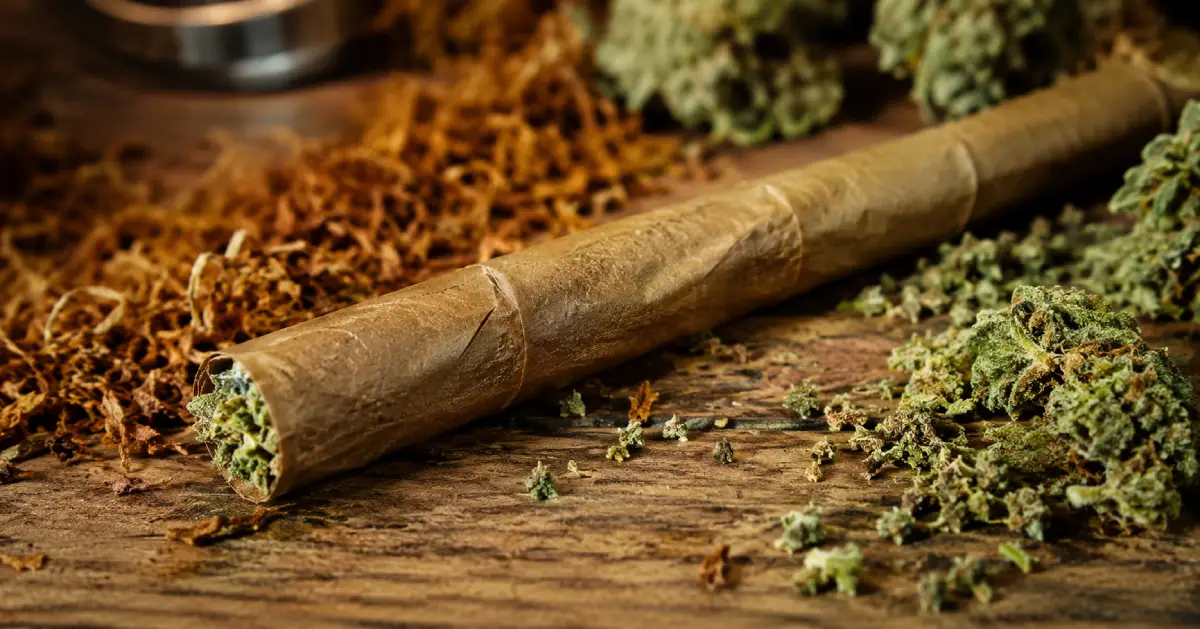
Traditional blunts generally do have tobacco because the cigar wrapper is made from tobacco leaf or tobacco-containing material.
Even after the cigar filler has been removed, the shell remains.
A blunt may contain tobacco in three possible places:
- The wrapper: Many cigar and cigarillo shells are tobacco-based.
- Residual filler: Small pieces of tobacco may remain after the cigar is emptied.
- An intentional mixture: Some people mix loose tobacco directly with cannabis.
However, not every product called a blunt contains tobacco. A blunt rolled with a verified hemp, palm, banana leaf, or other tobacco-free wrap may contain cannabis without tobacco.
The key is to identify the wrap rather than relying on the product’s shape or name.
Do Blunts Have Nicotine?
A blunt made with a tobacco-based wrapper can have nicotine.
The amount delivered to the smoker is difficult to predict. It can vary based on the wrapper, cigar brand, product size, remaining tobacco, burn pattern, inhalation depth, session length, and whether the blunt is shared.
Researchers frequently classify traditional blunt smoking as tobacco-cannabis co-use because cannabis is consumed inside a tobacco-containing cigar shell.
A tobacco-free blunt wrap generally avoids tobacco-derived nicotine, provided the manufacturer has not added nicotine separately. To reduce uncertainty, choose packaging that clearly states both “tobacco-free” and “nicotine-free.”
Do not assume “hemp wrap” automatically guarantees the absence of every tobacco-related ingredient. Confirm the label, especially with flavored or imported products.
Blunt vs. Joint vs. Spliff
These three terms are sometimes used interchangeably, but they describe different preparations.
| Product | Typical Filling | Typical Wrapper | Tobacco or Nicotine? |
| Blunt | Primarily cannabis | Cigar shell or blunt wrap | Often, if tobacco-based |
| Joint | Cannabis | Thin rolling paper | Usually no |
| Spliff | Cannabis mixed with tobacco | Rolling paper | Yes |
| Hemp blunt | Cannabis | Hemp-based wrap | Usually no, if verified |
| Infused blunt | Cannabis plus concentrate | Tobacco or tobacco-free wrap | Depends on wrapper |
A joint is generally cannabis rolled in thin paper. It does not normally contain tobacco unless someone deliberately adds it.
A spliff usually contains a mixture of cannabis and loose tobacco inside rolling paper.
A blunt traditionally contains cannabis inside a tobacco-based cigar wrapper. Unlike a spliff, it may not contain loose tobacco in the filling, but the wrapper itself can still introduce nicotine.
Why Do Blunts Feel Different From Joints?
A blunt may feel different for several reasons.
First, it often holds more cannabis than a standard joint. Consuming a larger quantity can increase total THC exposure, even when the flower has the same potency.
Second, a tobacco-based wrapper may introduce nicotine. Nicotine can create stimulating effects and may change how the overall experience is perceived.
Third, blunt wrappers tend to be thicker than standard rolling papers. They may burn more slowly, extending the smoking session and potentially increasing the amount of smoke inhaled.
Finally, flavored wrappers, THC concentrates, and different cannabis strains can all alter taste, aroma, strength, and perceived effects.
It is not possible to determine how strong a blunt will be based on appearance alone. Flower potency, concentrate content, individual tolerance, inhalation pattern, and serving size all matter.
Are Tobacco-Free Blunt Wraps Actually Tobacco-Free?
Some are, but you should verify the ingredients.
Common tobacco-free options include wraps made from hemp, palm leaf, banana leaf, chamomile, rose petals, cellulose, or other plant fibers.
A tobacco-free wrap can eliminate nicotine exposure from a traditional tobacco shell, but it does not eliminate the risks created by combustion. Burning cannabis and plant material still produces smoke, fine particles, irritants, and other compounds that enter the lungs.
The National Institute on Drug Abuse notes that cannabis smoke contains many of the same toxins, irritants, and carcinogens found in tobacco smoke. Long-term cannabis smoking is also associated with respiratory problems such as airway inflammation and chronic bronchitis, although more research is needed to separate the effects of cannabis from tobacco co-use.
In other words, tobacco-free does not mean smoke-free or risk-free.
Health Considerations When Smoking a Blunt
Smoking involves combustion, which means plant material is burned and the resulting smoke is inhaled.
Cannabis smoke can irritate the lungs and airways. The American Lung Association cautions against smoking marijuana because of its potential to damage lung health.
A traditional blunt may combine several sources of exposure:
- Cannabis smoke
- Tobacco-wrapper smoke
- Nicotine
- Flavoring byproducts
- Carbon monoxide
- Fine particulate matter
- Other combustion compounds
Using a tobacco wrapper can also introduce the possibility of nicotine dependence. Nicotine is highly addictive, and repeated exposure can make continued use more likely.
Cannabis itself also carries risks. THC can impair reaction time, coordination, attention, and judgment. Do not drive or operate machinery after using an intoxicating cannabis product.
People who are pregnant, nursing, under the legal age, living with heart or lung conditions, taking medications, or managing a history of substance use should speak with a qualified healthcare professional before using cannabis or nicotine products.
No smoking method is harmless.
How to Tell What Is Inside Your Blunt
If you did not prepare the blunt yourself, it may be difficult to know exactly what it contains.
Before consuming a pre-rolled or infused product, review:
- The flower strain or blend
- THC and CBD content
- Total product weight
- THC concentrate ingredients
- Wrapper material
- Tobacco and nicotine warnings
- Added flavors
- Testing information
- Manufacturing or packaging date
- Suggested serving size
For a commercially prepared product, a clear label is more useful than appearance or smell alone.
If someone else rolled the blunt, ask whether the wrapper contains tobacco, whether tobacco was mixed into the flower, and whether concentrates were added. A blunt that contains concentrate can be considerably more potent than one made with flower alone.
Avoid products with unclear ingredients, damaged packaging, signs of mold, chemical odors, or no reliable information about their source.
How to Reduce Unwanted Nicotine Exposure
If you use cannabis but do not want nicotine, avoid traditional cigar and cigarillo shells.
Instead, look for wraps clearly identified as:
- Tobacco-free
- Nicotine-free
- Made from hemp or another specified plant fiber
- Free from tobacco-derived ingredients
You can also choose a joint made with standard rolling paper, although inhaling cannabis smoke still has respiratory risks.
Do not use package color, flavor, or branding as proof that a wrap is nicotine-free. Ingredient and warning labels are the more reliable indicators.
If you notice cravings, irritability, difficulty concentrating, or repeated urges to use tobacco wraps, consider discussing nicotine exposure with a healthcare professional. Support is available for people who want to reduce or stop nicotine use.
Frequently Asked Questions
What is usually inside a blunt?
A blunt usually contains ground cannabis flower inside a cigar, cigarillo, or blunt wrap. It may also contain tobacco residue, nicotine from the wrapper, cannabis concentrate, flavorings, or a filter tip.
Does weed have nicotine naturally?
No. Standard cannabis flower is not a natural source of tobacco-style nicotine. Nicotine exposure generally comes from a tobacco wrapper, loose tobacco, or another nicotine-containing product.
Does marijuana contain nicotine?
Unmixed marijuana flower does not normally contain nicotine. Marijuana contains cannabinoids such as THC and CBD. A marijuana blunt may contain nicotine when it uses a tobacco-based wrapper.
Do blunts have tobacco if the cigar is emptied?
Usually, yes. Removing the loose cigar filling does not change the fact that a traditional cigar shell may itself be made from tobacco.
Do all blunts have nicotine?
No. A traditional blunt made with a tobacco wrapper can contain nicotine. A properly labeled tobacco-free and nicotine-free wrap should not contain tobacco-derived nicotine.
Are hemp blunts safer than tobacco blunts?
A hemp wrap avoids the tobacco and nicotine found in a traditional cigar wrapper, assuming it is accurately labeled. However, inhaling smoke from burning hemp and cannabis still exposes the lungs to combustion products.
Is a blunt the same as a spliff?
No. A spliff usually contains cannabis mixed directly with loose tobacco inside rolling paper. A blunt usually contains cannabis inside a cigar-style wrapper, which may itself contain tobacco.
Can a blunt contain concentrates?
Yes. Concentrates such as kief, hash, rosin, wax, or oil may be added to create an infused blunt. This can significantly increase the product’s total THC content.
The Bottom Line
So, what’s in a blunt?
In its traditional form, a blunt contains ground cannabis inside a tobacco-based cigar or cigarillo wrapper. Even when the loose tobacco has been removed, the wrapper may still contain tobacco and nicotine. Some blunts also include leftover tobacco, added flavorings, or high-potency cannabis concentrates.
Cannabis flower itself does not naturally contain nicotine like tobacco does. The nicotine in a blunt usually comes from the wrapper or from tobacco intentionally mixed with the cannabis.
Modern tobacco-free wraps provide another option, but you should always read the ingredient label instead of relying on the word “blunt.” A tobacco-free wrapper may prevent unwanted nicotine exposure, although smoking any material still produces substances that can irritate and harm the lungs.
Understanding the flower, wrapper, potency, and added ingredients allows you to make a more informed decision. When exploring cannabis products, choose transparent product information, start with an amount appropriate for your tolerance, and follow the laws that apply where you live.
Explore the cannabis flower and weed pre-roll selections available through Buy My Weed USA to compare strains, formats, and product details before making your choice.
References
Wikipedia. (2026, April 30). Blunt (cannabis). Available at: https://en.wikipedia.org/wiki/Blunt_(cannabis)
Santos-Longhurst, A., Medically reviewed by F. Dawson., Pharm.D. (2025, October 2). Smoking Cannabis: How Do Blunts, Spliffs, and Joints Compare?. Available at: https://www.healthline.com/health/what-is-a-blunt
