
Cannabis Education
Indoor vs Outdoor Weed Growing: Which Produces Better Quality, Yield & Value?
Jul
When it comes to cannabis cultivation, one of the most important decisions growers face is whether to grow weed indoors or outdoors. This choice doesn’t just affect how plants are grown—it directly impacts potency, flavor, yield, cost, and even environmental sustainability.
For consumers, understanding the difference between indoor and outdoor cannabis can help you make smarter buying decisions. For growers, it determines everything from setup costs to final product quality.
In this comprehensive guide, we’ll break down indoor vs outdoor weed growing in detail—covering real differences in THC levels, terpene profiles, yields, costs, and more—so you can confidently decide which method is best for your needs.
What Is Indoor Weed Growing?
Indoor weed growing involves cultivating cannabis plants inside a controlled environment such as a grow tent, dedicated room, or greenhouse with artificial systems.
Growers control every variable, including:
- Light (LED or HID grow lights)
- Temperature
- Humidity
- Airflow and CO₂ levels
- Nutrients and watering cycles
This precision allows growers to replicate ideal conditions year-round—essentially creating a “perfect climate” for cannabis growth.
👉 Key advantage: Maximum control = consistent, high-quality buds.
What Is Outdoor Weed Growing?
Outdoor weed growing relies on natural conditions like sunlight, soil, and seasonal weather patterns. Plants are typically grown in fields, gardens, or farms.
Instead of controlling the environment, growers work with nature.
Outdoor cultivation depends on:
- Sunlight cycles
- Climate and weather
- Soil quality
- Natural ecosystem interactions
👉 Key advantage: Lower cost + larger plant potential.
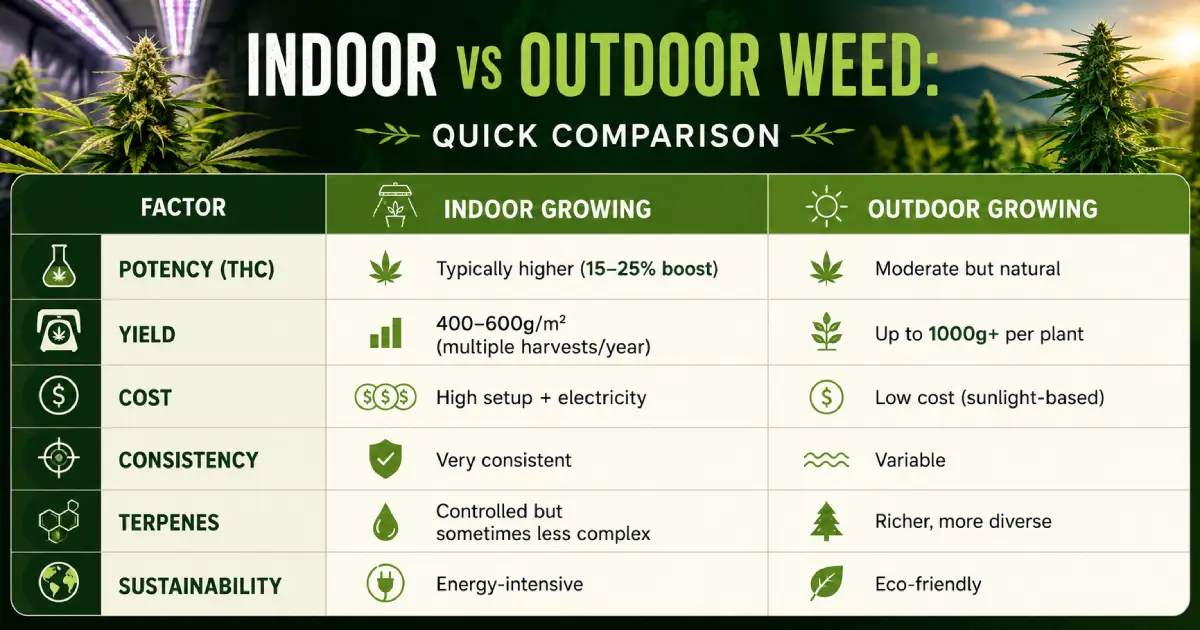
Indoor vs Outdoor Weed: Quick Comparison
| Factor | Indoor Growing | Outdoor Growing |
| Potency (THC) | Typically higher (15–25% boost) | Moderate but natural |
| Yield | 400–600g/m² (multiple harvests/year) | Up to 1000g+ per plant |
| Cost | High setup + electricity | Low cost (sunlight-based) |
| Consistency | Very consistent | Variable |
| Terpenes | Controlled but sometimes less complex | Richer, more diverse |
| Sustainability | Energy-intensive | Eco-friendly |
👉 Bottom line:
Indoor = precision and potency
Outdoor = scale and sustainability
Indoor Weed Growing: Advantages
1. Full Environmental Control
Indoor growing allows growers to fine-tune every aspect of plant development.
This includes:
- Exact light cycles (e.g., 18/6 or 12/12)
- Ideal temperature ranges (20–28°C)
- Controlled humidity levels
This level of control leads to predictable, repeatable results, which is crucial for commercial production.
2. Higher THC Levels & Visual Quality
Indoor cannabis is often associated with premium-grade buds because growers can optimize:
- Light intensity
- Nutrient delivery
- Stress conditions (to boost resin production)
Result:
- Higher THC levels
- Dense, compact buds
- Frosty trichome coverage
- Vibrant colors
👉 This is why most “top-shelf” cannabis is indoor-grown.
3. Year-Round Harvests
Unlike outdoor growing, indoor setups are not limited by seasons.
Growers can produce:
- 3–6 harvests per year
- Continuous supply cycles
This ensures consistent availability, which is important for marijuana dispensaries and cannabis brands.
4. Reduced Risk from External Threats
Indoor environments protect plants from:
- Harsh weather (storms, heatwaves)
- Pests and insects
- Wildlife damage
With proper management, this results in cleaner, more controlled crops.
5. Privacy and Security
Indoor growing is more discreet, which can be important in regulated or sensitive areas.
Indoor Weed Growing: Disadvantages
1. High Setup Costs
Indoor growing requires significant upfront investment:
- Grow lights
- Ventilation systems
- Air conditioning
- Grow tents or rooms
👉 Startup costs can range from hundreds to thousands of dollars.
2. High Energy Consumption
Lighting and climate control systems consume large amounts of electricity.
This leads to:
- Higher operating costs
- Larger carbon footprint
3. Limited Space = Smaller Yields
Indoor growers are restricted by physical space, which limits plant size and total yield compared to outdoor grows.
Outdoor Weed Growing: Advantages
1. Lower Cost of Production
Outdoor growing is far more affordable because it uses:
- Natural sunlight (free)
- Rainwater (in some climates)
- Soil ecosystems
👉 This significantly reduces production costs, making outdoor cannabis more accessible.
2. Larger Yields Per Plant
Outdoor plants can grow massive due to:
- Unlimited root expansion
- Full-spectrum sunlight
- Longer vegetative periods
Some outdoor plants can yield over 1 kilogram per plant under optimal conditions.
3. Eco-Friendly & Sustainable
Outdoor cultivation has a much smaller environmental footprint.
It relies on:
- Renewable sunlight
- Natural soil biology
- Minimal electricity
👉 This makes it the greener option.
4. Richer Terpene Profiles
Many cannabis enthusiasts believe outdoor weed has superior flavor.
Why?
Because plants interact with:
- Natural sunlight spectrum
- Soil microbes
- Environmental stressors
👉 This can lead to more complex terpene profiles and richer aromas.
Outdoor Weed Growing: Disadvantages
1. Lack of Environmental Control
Outdoor growers must deal with unpredictable factors:
- Weather changes
- Temperature swings
- Humidity fluctuations
These can affect plant health and final quality.
2. Seasonal Limitations
Outdoor cannabis typically has one harvest per year, depending on climate.
This limits supply consistency.
3. Pest & Disease Exposure
Outdoor plants are more vulnerable to:
- Insects
- Mold and mildew
- Animals
This increases the risk of crop loss.
4. Inconsistent Quality
Because conditions vary, outdoor cannabis can differ in:
- Potency
- Appearance
- Density
Indoor vs Outdoor Cannabis: Which Has Better Quality?
This depends on how you define “quality.”
Indoor Cannabis Quality
- Higher THC levels
- Better visual appeal
- Consistent results
Outdoor Cannabis Quality
- More natural terpene expression
- Unique flavor profiles
- Less processed environment
👉 Verdict:
Indoor wins for potency and aesthetics.
Outdoor wins for flavor and natural expression.
Cost Breakdown: Indoor vs Outdoor Growing
Indoor Costs
- Setup: $500–$10,000+
- Electricity: High monthly cost
- Maintenance: Ongoing
Outdoor Costs
- Land/space
- Soil preparation
- Minimal ongoing costs
👉 This is why outdoor weed is usually cheaper for consumers.
Hybrid Growing: The Best of Both Worlds?
Many modern growers use greenhouse or hybrid methods.
This combines:
- Natural sunlight (outdoor)
- Controlled environment (indoor)
Benefits:
- Lower energy costs than indoor
- More consistency than outdoor
- Balanced yields and quality
👉 Hybrid weed growing is becoming increasingly popular in commercial cannabis production.
Beginner Tips: Choosing the Right Growing Method
Choose Indoor Growing If You Want:
- Maximum potency
- Full control over environment
- Multiple harvests per year
- Premium-quality buds
Choose Outdoor Growing If You Want:
- Lower costs
- Larger yields
- Eco-friendly cultivation
- Natural terpene-rich cannabis
Common Mistakes to Avoid
Indoor Growing Mistakes
- Overwatering plants
- Poor ventilation
- Incorrect light distance
- Ignoring humidity levels
Outdoor Growing Mistakes
- Poor soil preparation
- Planting at the wrong time
- Lack of pest control
- Choosing the wrong strain for climate
Why This Matters When Buying Cannabis
Understanding how cannabis is grown helps you make better purchasing decisions.
- Want strong, dense buds? → Choose indoor
- Want value and flavor? → Choose outdoor
- Want balance? → Try greenhouse-grown cannabis
At Buy My Weed USA, we carefully source cannabis from both indoor and outdoor growers to ensure customers have access to:
- Premium indoor strains with high potency and visual appeal
- High-quality outdoor cannabis with natural flavor and value
- A wide variety of products including edibles and concentrates
This allows consumers to choose based on their preferences—not just price or hype.
Consumer Trends: Indoor vs Outdoor Preferences
Market trends show:
- Indoor cannabis is preferred for premium experiences
- Outdoor cannabis is favored by budget-conscious buyers
- Experienced users often enjoy both depending on the occasion
👉 The industry is shifting toward informed consumers who understand these differences.
Final Verdict: Indoor vs Outdoor Weed Growing
There is no universal “best” method—only what’s best for your goals.
- Indoor growing offers precision, potency, and consistency
- Outdoor growing provides sustainability, scale, and natural flavor
Both methods can produce exceptional cannabis when done correctly.
Ready to Experience the Difference?
Whether you prefer high-THC indoor strains or naturally grown outdoor cannabis, understanding the cultivation process helps you choose smarter.
At Buy My Weed USA, you’ll find a curated selection of both indoor and outdoor cannabis—so you can experience the difference firsthand.
👉 Explore different strains, compare quality, and discover what works best for your vibe.
FAQ
Is indoor weed stronger than outdoor?
Indoor weed is typically stronger due to controlled conditions that optimize THC production.
Why is outdoor weed cheaper?
Outdoor cannabis costs less to produce because it relies on natural sunlight and fewer resources.
Does outdoor weed taste better?
Many users believe outdoor cannabis has richer, more complex terpene profiles.
Can outdoor weed be high quality?
Yes—when grown properly, outdoor cannabis can rival indoor quality, especially in flavor.
References:
Haze, N. (2026, May 06). How to Grow Cannabis Indoors! (Complete Tutorial). Available at: https://www.growweedeasy.com/basics
Halperin, A. (2018, May 14). Should I grow my own weed at home? Here’s what you need to know. Available at: https://www.theguardian.com/society/2018/may/14/should-i-grow-my-own-marijuana-how-what-to-do-tips
