
Cannabis Education
THC vs. CBD: Key Differences and Benefits
Jul
Cannabis has become one of the most discussed plants in health, wellness, and medicine. As more products become available, many people want to understand the difference between THC vs. CBD before deciding which, if either, may be appropriate for their needs.
Although both compounds come from the cannabis plant, they affect the body differently. THC is known for its intoxicating effects, while CBD does not produce a “high.” Researchers continue to study both cannabinoids for their potential therapeutic uses, but there are important differences in their benefits, risks, legality, and side effects.
This guide explains THC vs. CBD, explores CBD vs. THC from multiple perspectives, and clarifies the relationship between cannabis vs. CBD so you can make informed decisions.
THC vs. CBD at a Glance
| Feature | THC | CBD |
| Full Name | Delta-9-Tetrahydrocannabinol | Cannabidiol |
| Psychoactive? | Yes | No |
| Produces a High? | Yes | No |
| Common Sources | Marijuana, some hemp products | Hemp and marijuana |
| FDA-Approved Medication | Dronabinol, Nabilone (synthetic THC-related medications) | Epidiolex® |
| Potential Uses Being Studied | Pain, appetite, nausea, muscle spasticity | Certain seizure disorders, anxiety, inflammation, pain, sleep |
| Common Side Effects | Dry mouth, dizziness, impaired coordination, anxiety, increased heart rate | Fatigue, diarrhea, changes in appetite, medication interactions |
| Drug Test Risk | High | Possible if products contain THC |
What Is THC?
THC (tetrahydrocannabinol) is the primary psychoactive cannabinoid found in cannabis.
A cannabinoid is a naturally occurring chemical compound found in cannabis that interacts with the body’s endocannabinoid system (ECS). The ECS is a network of receptors that helps regulate functions such as:
- Mood
- Appetite
- Sleep
- Pain perception
- Memory
- Immune response
THC mainly binds to CB1 receptors, which are concentrated in the brain and central nervous system. This interaction produces the characteristic “high” associated with cannabis.
The intensity of THC’s effects depends on several factors, including:
- Dosage
- Method of consumption
- Individual tolerance
- Body weight
- Metabolism
- Product potency
What Is CBD?
CBD (cannabidiol) is another major cannabinoid found in cannabis.
Unlike THC, CBD does not produce intoxication.
Instead of strongly binding to CB1 receptors, CBD influences multiple signaling pathways throughout the body and may indirectly affect the endocannabinoid system.
Researchers continue studying CBD because it appears to influence:
- Inflammation
- Pain signaling
- Stress responses
- Sleep
- Immune function
Unlike THC, CBD generally allows people to remain mentally clear while using it.
Cannabis vs. CBD: Understanding the Difference
One common misconception is that cannabis and CBD are the same thing.
They are not.
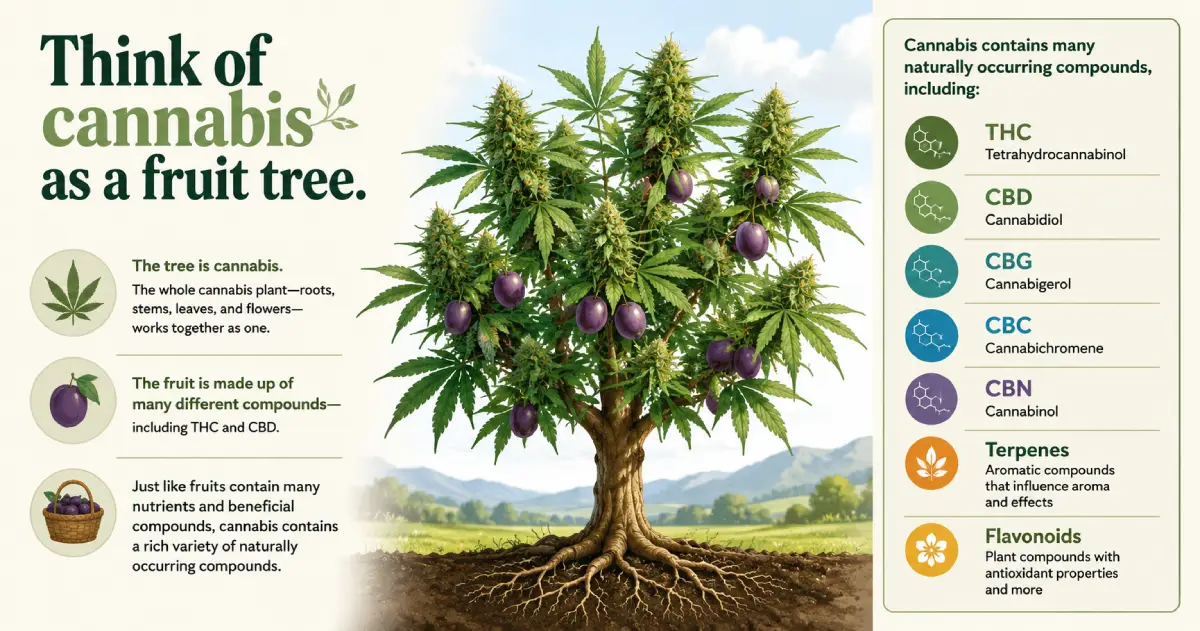
Cannabis is the plant.
CBD is just one of more than 100 known cannabinoids found within the cannabis plant.
Cannabis contains many naturally occurring compounds, including:
- THC
- CBD
- CBG
- CBC
- CBN
- Terpenes
- Flavonoids
Think of cannabis as a fruit tree.
The tree is cannabis.
The fruit is made up of many different compounds—including THC and CBD.
THC vs. CBD: How They Work
Both cannabinoids interact with the body’s endocannabinoid system.
However, they do so differently.
THC
THC strongly activates CB1 receptors.
This produces:
- Euphoria
- Altered perception
- Increased appetite
- Relaxation
- Changes in memory and attention
CBD
CBD has much weaker activity at CB1 receptors.
Instead, it influences multiple receptors and enzymes involved in:
- Serotonin signaling
- Pain regulation
- Inflammation
- Stress response
Researchers believe these broader interactions explain why CBD may produce different effects than THC.
Potential Benefits of THC
Research on THC continues, and several medical uses are supported by evidence.
Pain Management
THC may help reduce certain types of chronic pain, particularly neuropathic pain, although effectiveness varies by individual.
Appetite Stimulation
THC increases appetite, which may benefit people experiencing appetite loss due to medical conditions or treatments.
Nausea and Vomiting
Synthetic THC medications have been approved to help manage chemotherapy-induced nausea and vomiting.
Muscle Spasticity
Some evidence suggests THC-containing products may help reduce muscle stiffness in people with multiple sclerosis.
Sleep
Some individuals report improved sleep after THC use, although research findings remain mixed.
Potential Benefits of CBD
CBD has become one of the most researched cannabinoids.
Seizure Disorders
The strongest evidence for CBD comes from epilepsy treatment.
The FDA has approved Epidiolex®, a purified CBD medication, for treating several rare seizure disorders.
Anxiety
Some early research suggests CBD may reduce anxiety in certain situations.
However, larger clinical studies are still needed.
Pain and Inflammation
Researchers continue investigating CBD’s potential role in managing inflammatory conditions and chronic pain.
Evidence remains promising but inconclusive.
Sleep
Some people report improved sleep while using CBD.
Current research shows mixed results, and benefits may depend on the underlying cause of sleep problems.

THC vs. CBD Side Effects
Neither THC nor CBD is completely free from side effects.
Common THC Side Effects
- Dry mouth
- Red eyes
- Increased heart rate
- Dizziness
- Impaired coordination
- Slower reaction time
- Short-term memory problems
- Anxiety or paranoia in some individuals
Higher THC doses generally increase the likelihood of unwanted effects.
Common CBD Side Effects
CBD is generally considered well tolerated.
Possible side effects include:
- Fatigue
- Diarrhea
- Dry mouth
- Changes in appetite
- Sleepiness
CBD may also interact with certain medications by affecting liver enzymes responsible for drug metabolism. Anyone taking prescription medications should consult a healthcare professional before using CBD.
Can CBD Reduce THC’s Effects?
Researchers have explored whether CBD may influence some of THC’s effects, such as anxiety or impairment.
Some studies suggest CBD may lessen certain adverse effects of THC under specific conditions, while others find little or no consistent benefit.
The interaction appears to depend on factors such as:
- The ratio of CBD to THC
- Dose
- Timing
- Individual biology
More research is needed before firm conclusions can be drawn.
Full-Spectrum, Broad-Spectrum, and CBD Isolate Explained
When shopping for CBD products, you’ll often see three common terms.
Full-Spectrum CBD
Contains:
- CBD
- Small amounts of THC (within legal limits for hemp products in the U.S.)
- Other cannabinoids
- Terpenes
Some researchers refer to the possibility that these compounds work together as the “entourage effect,” though more research is needed to confirm its clinical significance.
Broad-Spectrum CBD
Contains:
- Multiple cannabinoids
- Terpenes
Typically has THC removed or present only in trace amounts.
CBD Isolate
Contains only purified CBD.
No meaningful amounts of THC or other cannabinoids are present.
Drug Testing: Will THC or CBD Show Up?
Most workplace drug tests look for THC metabolites.
THC
THC use commonly results in a positive drug test.
Detection times vary depending on:
- Frequency of use
- Dose
- Body composition
- Test type
CBD
Pure CBD should not trigger a positive THC test.
However, some CBD products may contain small amounts of THC, especially full-spectrum products. Repeated use of products containing THC could increase the likelihood of a positive test.
Choosing products that have been independently tested and accurately labeled can help reduce this risk.
THC vs. CBD: Is One Safer?
Safety depends on the individual and the context.
CBD generally has a favorable safety profile but can interact with medications.
THC carries additional considerations because it impairs judgment, coordination, and reaction time. People should not drive or operate machinery while under its influence.
Neither cannabinoid is appropriate for everyone. People who are pregnant, breastfeeding, have certain medical conditions, or take prescription medications should consult a healthcare professional before using cannabis-derived products.
THC, CBD, and U.S. Laws
Cannabis laws in the United States can be complex.
Federal Law
Under the 2018 Farm Bill, hemp containing no more than 0.3% delta-9 THC by dry weight was removed from the federal list of controlled substances. Hemp-derived CBD products that meet this definition may be legal federally, though the FDA regulates how CBD can be marketed in foods, supplements, and medicines.
Marijuana, which contains higher levels of THC, remains illegal under federal law, although many states have adopted their own medical or adult-use cannabis programs.
State Laws
State laws vary widely. Some states permit adult recreational use of cannabis, others allow only medical use, and some continue to prohibit most THC products. CBD laws may also differ depending on the product and its source.
Because regulations change over time, it is important to review the laws in your state before purchasing or using cannabis-derived products.
How to Choose Between THC and CBD
The choice depends on your goals, health status, and local laws.
Some people prefer CBD because it does not produce intoxication.
Others may use THC-containing products under the guidance of a healthcare provider where legally available.
Questions to consider include:
- Do you want to avoid psychoactive effects?
- Are you subject to workplace drug testing?
- Do you take prescription medications?
- What does your state’s law allow?
- Have you discussed cannabis use with your healthcare provider?
Starting with lower doses and monitoring your response can help reduce the risk of unwanted effects if you choose to use cannabinoid products.
Frequently Asked Questions
Is CBD the same as cannabis?
No. Cannabis is the plant, while CBD is one of many naturally occurring compounds found within it.
Does CBD make you feel high?
No. CBD does not produce the intoxicating effects associated with THC.
Which is better: THC or CBD?
Neither is universally better. They have different properties, potential uses, and risks. The appropriate choice depends on individual circumstances and healthcare guidance.
Can you take THC and CBD together?
Some products combine both cannabinoids. Researchers continue studying how they interact, but responses vary from person to person.
Is CBD legal in every state?
Not necessarily. Although many hemp-derived CBD products are widely available, state laws differ. Always check your local regulations.
Can CBD help with pain?
Research suggests CBD may have potential for some types of pain, but evidence remains mixed, and more high-quality clinical trials are needed.
Does THC stay in your body longer than CBD?
THC metabolites can remain detectable for days or weeks, especially with frequent use. CBD is typically eliminated more quickly, but this varies based on individual factors and product formulation.
What is the difference between hemp and marijuana?
Both are varieties of Cannabis sativa. In the United States, hemp is legally defined as cannabis containing no more than 0.3% delta-9 THC by dry weight, while marijuana contains higher concentrations of THC.
Conclusion
Understanding THC vs. CBD starts with recognizing that both are cannabinoids found in the cannabis plant, but they interact with the body in different ways. THC is primarily responsible for the intoxicating effects of cannabis and has established medical uses in certain situations, while CBD is non-intoxicating and is being studied for a wide range of potential therapeutic applications.
Neither compound is a one-size-fits-all solution. Their potential benefits, risks, side effects, and legal status vary depending on the product, dose, individual health factors, and where you live. As research continues to evolve, consumers can make better-informed decisions by relying on credible scientific evidence, understanding local laws, and discussing cannabinoid use with a qualified healthcare professional when appropriate.
References:
Science Direct. (2021, September 29). Tetrahydrocannabinol. Available At: https://www.sciencedirect.com/topics/neuroscience/tetrahydrocannabinol
US Food & Drug Administration. (2024, July 16). FDA Regulation of Cannabis and Cannabis-Derived Products, Including Cannabidiol (CBD). Available at: https://www.fda.gov/news-events/public-health-focus/fda-regulation-cannabis-and-cannabis-derived-products-including-cannabidiol-cbd
DiLonardo, M. J. Medically Reviewed by Begum, J., MD. (2023, October 31). CBD vs. THC: What’s the Difference? Available at: https://www.webmd.com/pain-management/cbd-thc-difference
