
Cannabis Education
Edibles vs. Smoking: Which Is Stronger?

Sep
When you compare edibles vs smoking, the obvious question is: which one gets you higher?
For many people, cannabis edibles can produce effects that feel stronger and last considerably longer than smoking weed. But that does not mean an edible is automatically more potent than cannabis flower. The two methods deliver THC—delta-9-tetrahydrocannabinol—to your body in fundamentally different ways.
When you smoke cannabis, THC moves from your lungs into your bloodstream rapidly. When you eat THC, it travels through your digestive system and is processed by your liver before reaching systemic circulation. During this process, some THC is converted into 11-hydroxy-THC (11-OH-THC), an active metabolite that contributes to the distinctive and sometimes more intense effects associated with oral cannabis.
That difference affects nearly everything: how quickly you feel high, how long the effects last, how predictable the experience is, and how easily you can adjust your intake.
So, are edibles stronger than smoking weed? Often they can feel stronger and last longer, but dose, tolerance, metabolism, product potency, food intake, and individual biology all matter.
Here is what you should know before comparing the two.
Edibles vs Smoking: Quick Comparison
| Factor | Edibles | Smoking Weed |
| How THC enters your body | Digestive tract, then liver | Lungs, then bloodstream |
| Onset | Usually delayed | Rapid |
| Duration | Generally longer | Generally shorter |
| Primary experience | Can build gradually and become intense | Effects appear rapidly |
| Dose adjustment | Difficult after swallowing | Easier to adjust gradually |
| Lung exposure | No cannabis smoke | Involves combustion and smoke |
| Discretion | Usually more discreet | Produces noticeable smoke and odor |
| Main overconsumption concern | Taking more before the first dose takes effect | Taking too much THC in a short period |
The CDC reports that edible cannabis can take 30 minutes to two hours to produce intoxicating effects. It also warns that edible effects can last longer than expected and may be unpredictable depending on dose, food, other substances, and individual factors.
Smoking works much faster because it bypasses digestion.
That distinction is one of the most important things to understand when comparing cannabis consumption methods.
How Does Smoking Weed Work?
When smoking weed, heat causes cannabinoids in cannabis flower to become available for inhalation. THC-containing smoke travels into your lungs, where compounds can pass into the bloodstream.
Your lungs contain millions of microscopic air sacs called alveoli. Their large surface area and close connection to blood vessels allow inhaled compounds to enter circulation quickly.
This explains why smoking cannabis produces such rapid effects.
Instead of waiting for your stomach and liver to process a product, THC can reach circulation within minutes. Health Canada’s review of cannabis pharmacology notes that central nervous system and physiological effects occur within minutes after smoking or vaporization.
This rapid onset creates an important practical difference.
If you take one inhalation and wait, you can observe how you feel before deciding whether to consume more. That does not make smoking risk-free, but it generally provides faster feedback than an edible.
Why Smoking Feels So Immediate
Smoking largely avoids what scientists call first-pass metabolism.
First-pass metabolism occurs when a swallowed substance travels from the gastrointestinal tract to the liver before reaching systemic circulation. Because inhaled THC enters through your lungs instead, much of it reaches circulation before undergoing extensive liver metabolism.
Your experience may therefore rise relatively quickly.
The exact intensity still varies according to factors such as:
- THC concentration
- Amount consumed
- Inhalation pattern
- Cannabis tolerance
- Frequency of use
- Individual biology
- Use of alcohol or other substances
The CDC emphasizes that cannabis affects people differently based on THC concentration, consumption method, previous experience, biology, and concurrent substance use.
In other words, two people smoking the same flower should not assume they will experience identical effects.
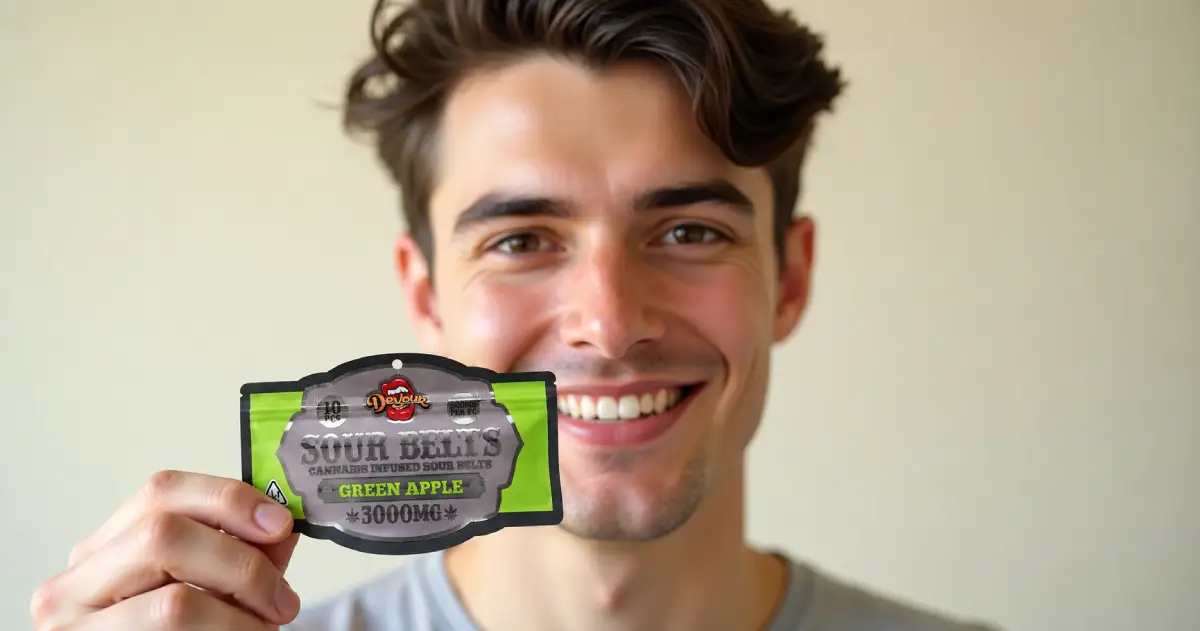
How Do Cannabis Edibles Work?
Edibles take a considerably different journey.
A cannabis edible is a food or beverage containing cannabinoids such as THC. Common formats include weed gummies, baked goods, cannabis chocolates, beverages, capsules, and other infused foods.
After you swallow an edible, it moves through your digestive system. THC is absorbed and then undergoes substantial processing in your liver.
That process takes time.
It is also where the chemistry becomes especially interesting.
What Is 11-Hydroxy-THC?
Your liver metabolizes some delta-9-THC into 11-hydroxy-THC, commonly abbreviated 11-OH-THC.
11-hydroxy-THC is psychoactive, meaning it can affect perception, cognition, mood, and behavior.
Oral THC produces proportionally more 11-hydroxy-THC than inhaled cannabis. Health Canada’s scientific review notes that oral THC results in significantly greater metabolism to 11-hydroxy-THC than pulmonary administration.
This helps explain a familiar observation among cannabis consumers:
An edible can feel very different from smoking flower even when both contain THC.
The difference is not simply about the number printed on a package.
Route of administration changes how THC is absorbed and metabolized.
Are Edibles Stronger Than Smoking?
For many consumers, edibles can feel stronger than smoking, particularly at higher doses.
But there is an important qualification.
You cannot reliably say that a specific edible is stronger than a specific amount of flower without knowing the dose, potency, consumption pattern, and individual response.
Consider two extremes.
A very small edible dose may feel considerably milder than smoking high-THC flower. Conversely, a large edible dose can produce far more intense and prolonged effects than a few inhalations of cannabis.
So the more useful question is:
Why can edibles feel stronger?
There are three major reasons.
1. THC Is Metabolized Differently
Oral THC undergoes substantial first-pass metabolism in your liver, producing relatively greater amounts of 11-hydroxy-THC.
Smoking follows a much more direct route from your lungs into circulation.
That metabolic difference contributes to the different experiences associated with the two consumption methods.
2. Edibles Last Longer
Intensity is not only about the highest point of an experience.
Duration matters too.
An effect that persists for several hours may feel substantially more powerful than one that rises and falls relatively quickly.
Oral cannabis generally has a slower onset and longer duration of pharmacological effects than smoked cannabis.
That longer timeline is one reason people frequently describe edibles as being “stronger.”
3. You Cannot Easily Reverse an Edible Dose
If you smoke cannabis gradually, you can stop inhaling once you have reached your preferred level.
With an edible, the entire swallowed dose continues through digestion and metabolism.
You cannot simply remove half the dose because you decide an hour later that you took too much.
This makes dose selection particularly important.
How Long Do Edibles Take to Kick In?
One of the most common mistakes with edibles is assuming that nothing is happening because you do not immediately feel an effect.
The CDC says intoxicating effects from edibles may take approximately 30 minutes to two hours to appear.
Even that range should not be treated as a countdown timer.
Your experience may vary depending on:
- What and when you last ate
- THC dose
- Product formulation
- Metabolism
- Previous cannabis use
- Individual physiology
- Other medications or substances
This delay creates a classic overconsumption problem.
Someone takes an edible.
An hour passes.
They feel little or nothing.
They take another.
Then the first dose begins producing substantial effects while the second dose is also being absorbed.
Instead of gradually increasing the experience, they may end up with considerably more THC than intended.
The CDC specifically identifies delayed onset as one reason edibles carry a greater risk of poisoning than smoked cannabis.

How Quickly Does Smoking Weed Hit?
Smoking is almost the opposite.
Instead of waiting for digestion and liver processing, inhaled THC enters circulation rapidly through the lungs.
Effects can begin within minutes.
This gives you more immediate feedback.
That is particularly relevant if you are unfamiliar with a new strain or potency level. Rather than judging a product solely from the percentage on its label, you can recognize that actual effects depend on how much you consume and your individual response.
But rapid onset should not be confused with greater overall strength.
Smoking tends to win on speed. Edibles tend to produce a longer-lasting experience.
Those are different measurements.
How Long Do Edibles Last Compared With Smoking?
This is another major difference in edibles vs smoking.
Oral THC generally produces longer-lasting effects than inhaled THC.
The exact duration cannot be guaranteed because it depends on the person and dose.
With smoking, THC reaches circulation quickly and concentrations subsequently decline. With oral cannabis, absorption and metabolism unfold more gradually.
That means an edible experience may occupy a much larger portion of your day than smoking.
Residual impairment can also persist beyond the point at which you feel the strongest subjective effects.
For that reason, avoid driving, operating machinery, or performing safety-sensitive activities while impaired.
Can You Compare Milligrams of Edibles With THC Percentage in Flower?
Not directly.
This is one of the biggest sources of confusion when people compare smoking weed with edibles.
Edibles are commonly described according to milligrams of THC per serving or package.
Cannabis flower is commonly described using a THC percentage.
Suppose flower is labeled 20% THC. That does not mean smoking one gram gives your body the equivalent experience of swallowing a particular number of milligrams of THC.
Why?
Because combustion, inhalation technique, absorption, product composition, and metabolism all affect the amount that ultimately reaches circulation.
Edible THC is also metabolized differently.
Therefore, a statement such as:
“10 mg of edible THC equals X amount of flower”
is too simplistic to be reliable.
The routes are not directly interchangeable.
If you are changing consumption methods, approach the new method as a different experience rather than trying to calculate a perfect one-to-one conversion.
Edibles vs Smoking: Which Gives You More Control?
Smoking generally provides faster real-time feedback.
You inhale, wait, and can evaluate the effects relatively quickly.
Edibles can offer a different type of dose information: commercially manufactured products may identify a particular amount of THC per serving.
But a precise number on a package does not guarantee a precisely predictable experience.
Your body still determines how that dose is absorbed and metabolized.
This creates an interesting tradeoff:
Edibles may provide a clearly labeled dose, while smoking provides quicker feedback about that dose’s effects.
Neither eliminates individual variability.
Does Your Tolerance Affect Edibles and Smoking?
Absolutely.
Tolerance means that repeated exposure to a substance can reduce your response to a given dose over time.
Someone who frequently uses cannabis may experience a given amount differently from someone with little or no recent exposure.
However, familiarity with smoking does not guarantee that you will respond predictably to edibles.
Because oral cannabis follows a different absorption and metabolic pathway, an experienced smoker can still underestimate an edible.
Other variables include body chemistry, genetics, gastrointestinal function, food intake, product potency, and frequency of cannabis consumption.
The CDC similarly notes that previous cannabis experience and individual biology influence how cannabis affects a person.
Does Eating Before an Edible Change the Experience?
Food can influence oral drug absorption, and the timing and composition of meals can affect your experience with an edible.
THC is lipophilic, meaning it dissolves readily in fats.
However, this does not mean you can precisely manipulate an edible’s strength by eating a particular meal. Human digestion is complicated, and differences in food intake are another reason edible onset can be difficult to predict.
The CDC specifically lists whether an edible is consumed on an empty stomach among factors that can affect its intoxicating effects.
Consistency can therefore be useful when learning how a particular legally obtained, clearly labeled product affects you.
Smoking Weed vs Edibles: What About Lung Health?
One clear distinction is that eating cannabis does not involve inhaling smoke.
Smoking does.
Burning cannabis creates combustion products that enter your respiratory system. The American Lung Association states that marijuana smoke contains many of the same toxins, irritants, and carcinogens found in tobacco smoke and associates regular marijuana smoking with chronic bronchitis and respiratory symptoms.
Choosing an edible avoids smoke exposure, but that should not be interpreted as meaning edibles are harmless.
They have their own risks, particularly delayed onset, prolonged intoxication, accidental ingestion, and consuming more THC than intended.
So the comparison is better framed as different risk profiles, not “safe versus unsafe.”
What About Vaping?
Vaping is another inhalation method, but it should not simply be grouped with smoking.
Smoking burns cannabis plant material.
Vaping heats cannabis flower, oil, or concentrate to create an aerosol for inhalation.
Both can produce rapid effects because cannabinoids enter through the lungs, but their exposure profiles differ.
Vaping is not risk-free. The CDC notes that a 2019 outbreak of e-cigarette or vaping product use-associated lung injury (EVALI) was strongly linked to vitamin E acetate in certain THC-containing vaping products.
If you are comparing products, consider the product source, ingredients, cannabinoid concentration, and local regulatory standards rather than assuming every inhaled product is equivalent.
How to Make Weed Butter: Understanding the Basics
People researching edibles often also search how to make weed butter, or cannabutter.
Cannabutter is butter infused with cannabis compounds and used as an ingredient in homemade edibles.
The concept works because cannabinoids such as THC are fat-soluble. Cannabis is typically heated before infusion so cannabinoid acids such as THCA (tetrahydrocannabinolic acid) undergo decarboxylation.
Decarboxylation is the heat-driven chemical reaction that converts THCA into psychoactive THC.
The cannabis is then infused into a fat such as butter.
However, homemade cannabis butter presents a significant dosing challenge: potency can be difficult to determine accurately without laboratory testing.
The starting potency of the flower, decarboxylation efficiency, infusion process, losses during preparation, and how evenly the finished butter is distributed through a recipe can all change the final amount of THC per serving.
That is why you should not assume one homemade brownie or cookie contains a particular THC dose simply because you know how much cannabis went into the batch.
For consumers who prioritize predictable dosing, clearly labeled and regulated products can provide more useful potency information than homemade infusions, although edible effects still vary between individuals.
Why Homemade Edibles Can Feel Surprisingly Strong
Imagine making a batch of infused brownies.
Even if you know the approximate potency of the cannabis flower, several uncertainties remain:
- How much THC became available during heating?
- How efficiently did cannabinoids transfer into the butter?
- Was the infused butter distributed evenly?
- How accurately were portions divided?
- How much THC did your body absorb?
Those variables can add up.
This is why learning how to make weed butter is not the same as knowing precisely how much THC is in every homemade serving.
Treat homemade edibles cautiously because visual size does not tell you potency.
Are Edibles More Efficient Than Smoking?
“Efficient” can mean several different things.
If you mean fastest delivery, inhalation has the advantage.
If you mean long-lasting effects, oral cannabis generally lasts longer.
If you mean how much THC actually reaches systemic circulation, the answer becomes more complicated because oral THC undergoes extensive first-pass metabolism, while smoking loses cannabinoids through combustion and sidestream smoke and varies with inhalation behavior.
That is another reason simple claims such as “edibles waste less THC” or “smoking is stronger because bioavailability is higher” do not tell the full story.
Bioavailability alone does not determine the subjective experience.
Metabolism matters too.
Why the Same Edible Can Affect Two People Differently
Cannabis response is highly individual.
Give two adults the same labeled edible dose and their experiences may differ substantially.
Potential influences include:
- Cannabis tolerance
- Genetics
- Metabolic differences
- Body composition
- Food intake
- Medications
- Alcohol or other substances
- Product formulation
- Previous cannabis experience
- Individual sensitivity to THC
This variability is particularly important when someone recommends a dose based entirely on their own experience.
“My friend takes this amount” is not a reliable dosing standard.
Your response may be different.
Why Edible Overconsumption Is Different
A cannabis edible may not seem powerful during its initial delay.
That can create false confidence.
The person consumes more, and then multiple servings begin taking effect.
According to the CDC, edibles carry a greater poisoning risk than smoked cannabis partly because their effects are delayed, can last longer than expected, and can be unpredictable.
Taking too much THC can produce unpleasant effects such as extreme confusion, anxiety, panic, paranoia, fast heart rate, increased blood pressure, hallucinations, or severe nausea and vomiting. The CDC notes that consuming too much cannabis can result in significant adverse reactions even though a fatal overdose caused solely by cannabis is considered unlikely.
Seek medical assistance if symptoms are severe or concerning.
Keep Cannabis Edibles Away From Children and Pets
Edibles introduce another safety issue that cannabis flower generally does not create to the same degree: they may resemble ordinary food.
Children or other people in a household may consume them accidentally if they are not stored securely.
Keep THC products in their original packaging when possible and store them securely away from children and pets.
The CDC identifies accidental ingestion by children as an important concern with cannabis edibles.
Avoid transferring infused products into unmarked food containers where they could be mistaken for ordinary snacks.
Edibles vs Smoking: Which Is More Discreet?
Edibles generally have an obvious advantage here.
Smoking cannabis creates smoke and a recognizable odor. It also requires somewhere that smoking is permitted.
An edible does not generate cannabis smoke during consumption.
That makes oral products easier to use without smoke or lingering combustion odor.
Discretion, however, does not change impairment. You should still follow applicable laws and avoid driving or safety-sensitive activities after consuming intoxicating cannabis.
Is Smoking or Eating Cannabis Better for Beginners?
There is no single consumption method that is ideal for every new cannabis consumer.
Each presents a different challenge.
Smoking has a rapid onset, which provides faster feedback, but it exposes your respiratory system to smoke.
Edibles eliminate smoke exposure but introduce delayed effects and potentially prolonged intoxication.
If you are inexperienced with THC, the most important principle is to avoid assuming that more is automatically better.
High THC levels do not necessarily create a more enjoyable experience.
Understanding the product, its potency, your consumption method, and your own tolerance matters more.
Edibles vs Smoking: Frequently Asked Questions
Do edibles get you higher than smoking?
They can. Oral THC is processed differently from inhaled THC and produces proportionally more 11-hydroxy-THC. Edibles also tend to produce longer-lasting effects. Actual intensity depends on dose, tolerance, metabolism, food intake, and other individual factors.
Why do edibles hit so hard?
One reason is first-pass metabolism. After oral THC reaches your liver, some is converted into psychoactive 11-hydroxy-THC. Combined with the longer duration and delayed onset, this can make edible experiences feel particularly intense.
Why don’t edibles affect some people as strongly?
Individual metabolism and biology vary. Food intake, product formulation, tolerance, gastrointestinal factors, dose, medications, and genetics can potentially influence your response. A weak response does not mean that immediately taking a large additional dose is safe.
Is 10 mg of an edible the same as smoking 10 mg of THC?
No. Oral and inhaled THC cannot be treated as a simple milligram-for-milligram equivalent because their absorption, bioavailability, metabolism, and timing differ.
Which lasts longer: edibles or smoking?
Edibles generally last longer. Oral THC has slower absorption and a longer duration of pharmacological effects than smoked cannabis.
Which works faster?
Smoking. Inhaled cannabinoids can produce effects within minutes, while edibles may require 30 minutes to two hours before intoxicating effects become noticeable.
Can you smoke and take edibles together?
Combining THC products can increase total THC exposure and make the resulting effects harder to predict. Using alcohol or other substances at the same time can further change cannabis effects and potentially increase harm.
Are edibles healthier than smoking?
Edibles avoid cannabis smoke and therefore eliminate smoke exposure from the consumption method. That does not make them risk-free. Edibles have separate concerns involving delayed onset, prolonged impairment, overconsumption, and accidental ingestion.
Can you drive after using an edible?
You should not drive while impaired by cannabis. Because edible effects can be delayed and prolonged, you should not rely on a predetermined number of hours as proof that you are safe to drive.
Edibles vs Smoking: The Bottom Line
So, which is stronger: edibles or smoking weed?
There is no universal potency winner because the actual dose and your individual response matter. However, edibles frequently feel stronger and generally last longer, while smoking produces much faster effects and provides quicker feedback about how THC is affecting you.
The difference starts with pharmacology.
Smoking sends THC through your lungs into circulation rapidly. Edibles send THC through your digestive system and liver, where substantially more is metabolized into 11-hydroxy-THC. That different pathway changes the onset, duration, and character of the experience.
Instead of asking only which method is stronger, consider what actually matters to you: onset time, duration, predictability, smoke exposure, discretion, and your tolerance.
Whether you’re researching cannabis flower, weed pre-rolls, edibles, THC concentrates, or other formats, understanding how each product works can help you make more informed choices. BuyMyWeedUSA.com offers additional cannabis product information and educational resources so you can compare your options before exploring products available on the site.
Cannabis laws vary by state and remain subject to federal rules, so check the laws that apply where you live before purchasing, possessing, or consuming cannabis.
References:
Canadian Centre on Substance Use and Addiction. (June 2019). Cannabis: Inhaling vs Ingesting. Available at: https://www.ccsa.ca/sites/default/files/2019-06/CCSA-Cannabis-Inhaling-Ingesting-Risks-Infographic-2019-en_1.pdf
Rae, A., PhD, Reviewed by Stacia Woodcock, S, PharmD. (2024, May 21). How Long Do Cannabis Edibles Last?. Available at: https://www.goodrx.com/health-topic/cannabis/how-long-edibles-last
Giambrone, H., Edited By: N. DeMucci, Clinically Reviewed By: C. Spears, Medically Reviewed By: Dr. A. Alva. (January 28, 2026). Edible Overload Recovery Guide. Available at: https://bakersfieldrecoverycenter.com/mental-health/recover-edibles-overload-guide/
