
Shrooms
Magic Mushrooms vs. LSD: Key Differences and Similarities
Aug
Psychedelics have experienced a resurgence in public interest as researchers continue exploring their therapeutic potential and more states reconsider how these substances are regulated. If you’ve been researching shrooms vs acid, you may be wondering how magic mushrooms and LSD compare, what effects they produce, and whether one is considered safer than the other.
Although both substances are classified as a psychedelic drug, they differ in their origins, chemical composition, duration, intensity, and legal status. Understanding these differences can help you make more informed decisions while separating myths from facts.
In this guide, you’ll learn everything you need to know about magic mushroom vs LSD, including how they work, their effects, potential risks, similarities, differences, and what to know about shrooms and weed. Whether you’re simply curious or researching psychedelic education, this comparison offers a balanced, evidence-based overview.
What Are Magic Mushrooms?
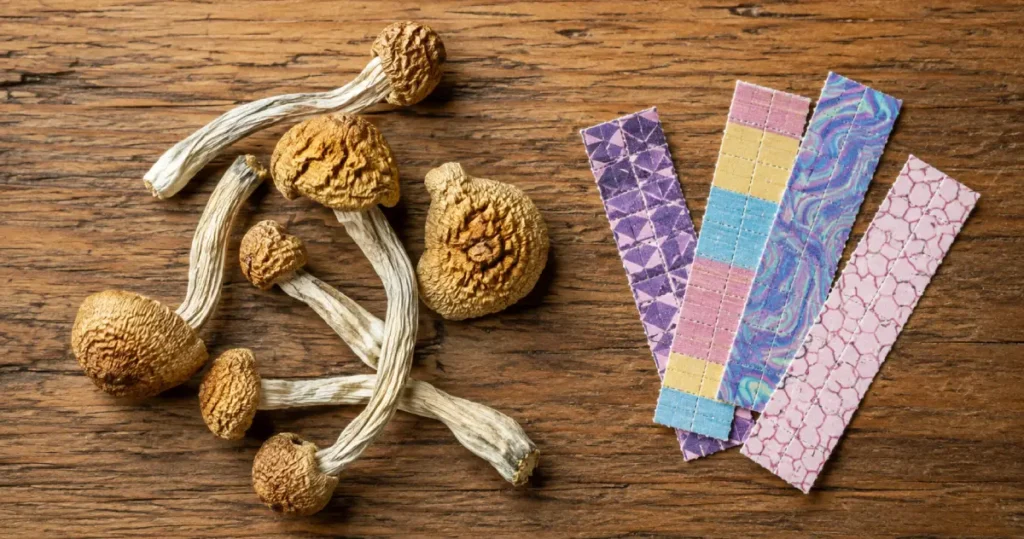
Magic mushrooms, commonly called shrooms, are naturally occurring fungi that contain the psychoactive compounds psilocybin and psilocin.
Psilocybin is a naturally occurring psychedelic compound that converts into psilocin after consumption. Psilocin interacts primarily with serotonin receptors in the brain, particularly the 5-HT2A receptor, which contributes to altered perception, mood, and cognition.
Magic mushrooms have been used ceremonially and spiritually by Indigenous cultures for centuries. Today, researchers are studying psilocybin for its potential therapeutic applications, including treatment-resistant depression, anxiety associated with serious illness, and certain substance use disorders.
Common forms include:
- Dried mushrooms
- Mushroom capsules
- Edibles infused with mushroom extracts
- Mushroom teas
The effects usually begin within 20 to 60 minutes after consumption, depending on factors such as dosage, metabolism, and whether you’ve eaten recently.
What Is LSD?
LSD (lysergic acid diethylamide), often called acid, is a synthetic psychedelic first synthesized by Swiss chemist Albert Hofmann in 1938 while researching ergot-derived compounds.
Like psilocybin, LSD primarily affects serotonin receptors, producing profound changes in perception, thinking, emotions, and sensory processing.
Unlike mushrooms, LSD is typically distributed as:
- Blotter paper
- Liquid drops
- Gel tabs
- Tablets
Because LSD is extremely potent, active doses are measured in micrograms rather than milligrams.
Effects generally begin within 30 to 90 minutes and can last significantly longer than those of magic mushrooms.
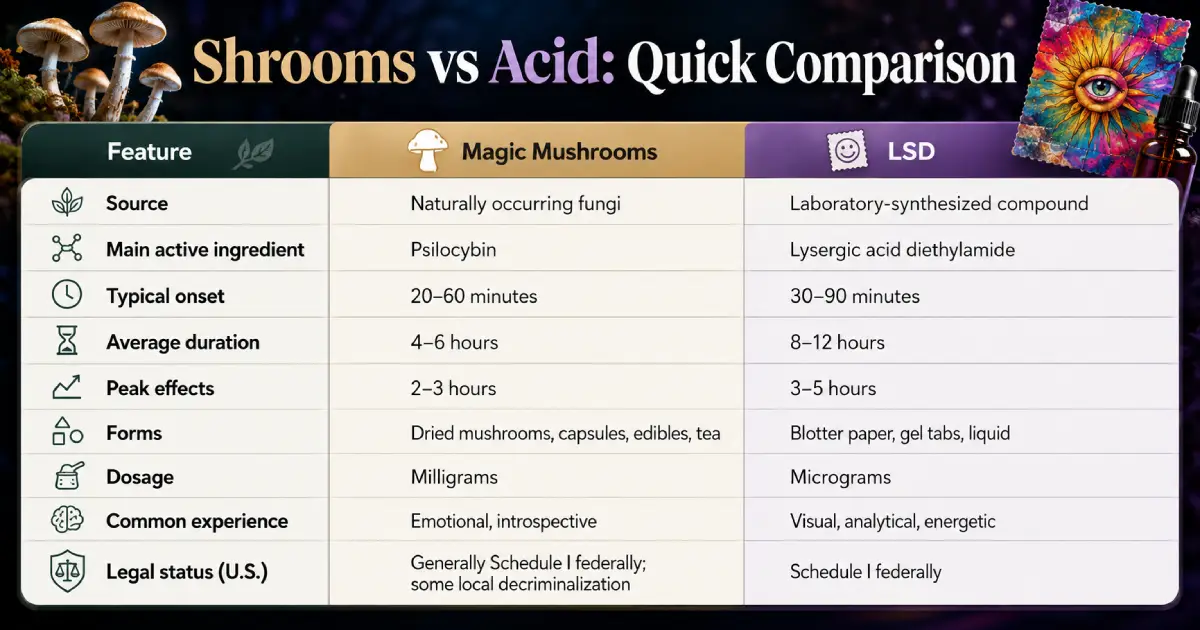
Shrooms vs Acid: Quick Comparison
| Feature | Magic Mushrooms | LSD |
| Source | Naturally occurring fungi | Laboratory-synthesized compound |
| Main active ingredient | Psilocybin | Lysergic acid diethylamide |
| Typical onset | 20–60 minutes | 30–90 minutes |
| Average duration | 4–6 hours | 8–12 hours |
| Peak effects | 2–3 hours | 3–5 hours |
| Forms | Dried mushrooms, capsules, edibles, tea | Blotter paper, gel tabs, liquid |
| Dosage | Milligrams | Micrograms |
| Common experience | Emotional, introspective | Visual, analytical, energetic |
| Legal status (U.S.) | Generally Schedule I federally; some local decriminalization | Schedule I federally |
Magic Mushroom vs LSD: How Do They Work?
Although these substances are chemically different, both primarily influence the brain’s serotonin system.
Serotonin is a neurotransmitter—a chemical messenger that helps regulate mood, perception, sleep, and cognition.
Both psilocybin and LSD activate serotonin receptors, particularly the 5-HT2A receptor, altering communication between brain regions responsible for perception, emotion, and self-awareness.
Researchers believe these changes may temporarily increase brain connectivity and flexibility, helping explain why many users report:
- Enhanced creativity
- Altered sense of time
- Visual distortions
- Emotional insight
- Spiritual experiences
Scientists continue studying how these neurological effects may contribute to therapeutic benefits under carefully controlled clinical settings.
Key Similarities Between LSD and Shrooms
When comparing LSD vs shrooms, you’ll find many overlapping characteristics.
Both Are Psychedelic Drugs
Both substances are classic psychedelics that significantly alter consciousness, perception, mood, and thought patterns.
Neither acts like stimulants or opioids, although they can temporarily increase heart rate and blood pressure.
Both Affect Serotonin Receptors
Rather than producing their effects through dopamine, both primarily interact with serotonin receptors involved in sensory processing and cognition.
Both Can Produce Visual Changes
Users commonly report:
- Enhanced colors
- Geometric patterns
- Moving surfaces
- Altered depth perception
- Closed-eye visuals
The intensity varies depending on dosage, environment, mindset, and individual sensitivity.
Both Carry Psychological Risks
Although neither substance is considered physically addictive, both can trigger challenging psychological experiences, especially at higher doses or in stressful environments.
Possible risks include:
- Panic attacks
- Anxiety
- Confusion
- Temporary paranoia
- Distressing hallucinations
Individuals with personal or family histories of psychotic disorders may face greater risks and should avoid psychedelic use unless participating in approved clinical research.
The Biggest Differences Between LSD vs Shrooms
Despite many similarities, several important differences separate these psychedelics.
Origin
Magic mushrooms occur naturally in various mushroom species worldwide.
LSD is entirely synthetic and manufactured in laboratories.
Duration
One of the biggest differences involves how long the experience lasts.
Typical mushroom experiences last:
- 4 to 6 hours
Typical LSD experiences last:
- 8 to 12 hours
Some users report lingering stimulation or difficulty sleeping after LSD.
Mental Experience
Many users describe mushrooms as:
- Emotional
- Introspective
- Spiritual
- Nature-oriented
LSD is often described as:
- Highly visual
- Analytical
- Energetic
- Mentally stimulating
These experiences remain highly subjective and vary considerably between individuals.
Visual Effects
Although both produce visual alterations, LSD generally creates:
- Sharper geometric visuals
- More prolonged visual distortations
- Stronger color enhancement
Mushrooms often produce:
- Organic visual patterns
- Flowing textures
- Emotional visual symbolism
Physical Effects
Magic mushrooms commonly cause:
- Nausea
- Stomach discomfort
- Yawning
- Changes in body temperature
LSD more commonly produces:
- Dilated pupils
- Increased energy
- Jaw tension
- Mild increases in heart rate
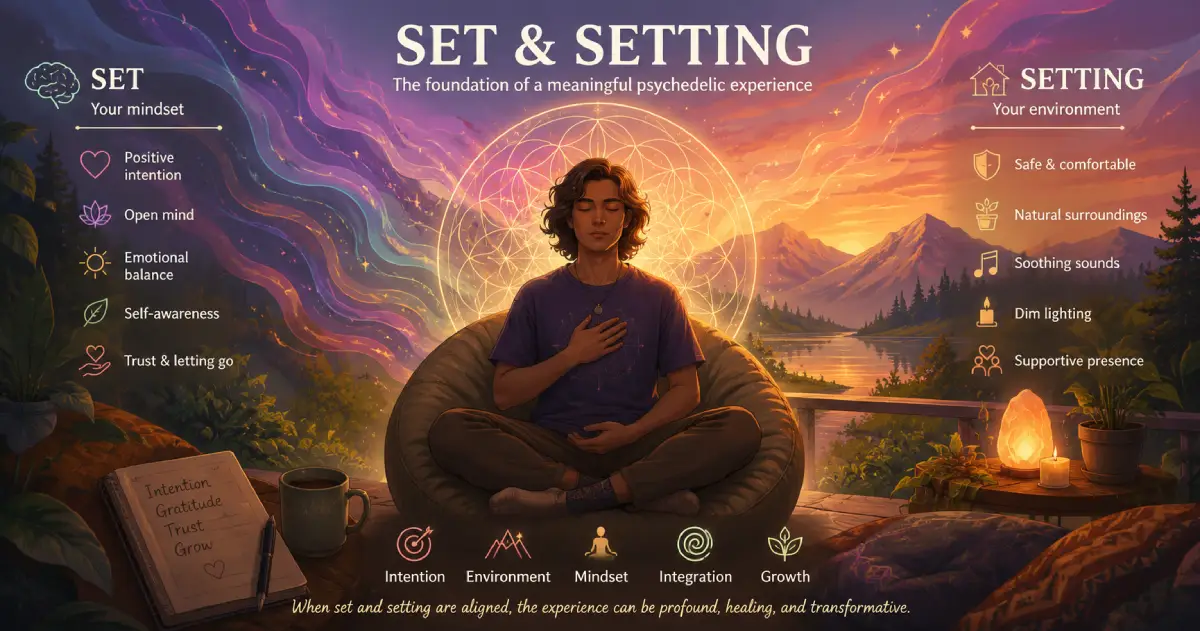
What Is “Set and Setting”?
One of the most important concepts in psychedelic experiences is set and setting.
Set refers to your mindset, emotions, expectations, and mental health before taking a psychedelic.
Setting refers to your physical and social environment during the experience.
Research suggests that both significantly influence whether an experience feels positive or distressing.
Factors that may increase risk include:
- High stress
- Unfamiliar surroundings
- Unsafe environments
- Lack of trusted companions
- Mixing substances
Clinical psychedelic research places strong emphasis on preparation, supervision, and supportive environments.
Can You Mix Shrooms and Weed?
Many people search for information about shrooms and weed, but combining psychoactive substances carries additional uncertainty.
Cannabis may alter or intensify psychedelic experiences in unpredictable ways.
Some users report:
- Increased relaxation
- Enhanced visuals
- Greater introspection
Others experience:
- Heightened anxiety
- Confusion
- Dizziness
- Panic reactions
Individual responses vary considerably based on:
- Cannabis potency
- THC tolerance
- Mushroom dose
- Personal sensitivity
Because combining psychoactive substances can increase unpredictability, caution is warranted.
Are Magic Mushrooms or LSD Addictive?
Current scientific evidence suggests that classic psychedelics like psilocybin and LSD have a relatively low potential for physical dependence compared with substances such as opioids, nicotine, or alcohol.
Repeated use also tends to produce rapid tolerance, meaning larger amounts may be needed to achieve similar effects if taken repeatedly over a short period.
However, low addiction potential does not mean they are risk-free.
Some individuals may develop unhealthy behavioral patterns involving repeated use, and psychological risks remain possible.
Potential Benefits Being Studied
Researchers continue investigating whether psychedelics may help treat certain mental health conditions when administered in carefully controlled medical settings.
Current areas of research include:
- Major depressive disorder
- Treatment-resistant depression
- Post-traumatic stress disorder
- End-of-life anxiety
- Obsessive-compulsive disorder
- Alcohol use disorder
- Tobacco dependence
It is important to understand that these studies involve:
- Medical screening
- Professional supervision
- Standardized dosing
- Structured psychotherapy
These findings should not be interpreted as evidence that self-medicating is safe or effective.
Potential Risks and Side Effects
Both LSD and mushrooms carry potential health risks.
Possible short-term side effects include:
- Anxiety
- Panic
- Confusion
- Increased heart rate
- Elevated blood pressure
- Nausea
- Dizziness
- Impaired judgment
Rare but serious complications may include:
- Persistent psychological distress
- Hallucinogen Persisting Perception Disorder (HPPD)
- Dangerous behavior resulting from impaired perception
Seeking immediate medical care is recommended if someone experiences severe confusion, aggressive behavior, or symptoms suggesting a medical emergency.
Can Drug Tests Detect LSD or Psilocybin?
Standard workplace drug tests generally do not screen for LSD or psilocybin.
However, specialized laboratory testing can detect these substances under certain circumstances.
Detection windows vary depending on:
- Test type
- Individual metabolism
- Dosage
- Time since use
Drug testing policies differ between employers and organizations.
Are Magic Mushrooms and LSD Legal in the United States?
Under federal law, both psilocybin and LSD remain classified as Schedule I controlled substances under the Controlled Substances Act.
However, laws continue to evolve.
Several cities and states have adopted limited decriminalization measures or created regulated access programs for psilocybin under specific circumstances.
These changes vary significantly by jurisdiction, and federal law still applies.
Always check your state’s current regulations before possessing or using any controlled substance.
Which One Lasts Longer?
If you’re comparing shrooms vs acid based solely on duration, LSD generally lasts much longer.
Typical timeline:
Magic Mushrooms
- Onset: 20–60 minutes
- Peak: 2–3 hours
- Total duration: 4–6 hours
LSD
- Onset: 30–90 minutes
- Peak: 3–5 hours
- Total duration: 8–12 hours
Longer experiences may not necessarily be better. Individual preferences, tolerance, dosage, and setting all influence how someone perceives the experience.
Frequently Asked Questions
Are shrooms stronger than LSD?
Neither substance is inherently “stronger.” They produce different types of psychedelic experiences. LSD generally lasts longer and may produce more pronounced visual effects, while mushrooms are often described as more emotionally introspective.
Which is safer: magic mushroom vs LSD?
Neither substance can be considered completely safe. Both carry psychological and physical risks, especially when used outside controlled clinical settings. Individual health history, dosage, and environment all influence risk.
Can you combine shrooms and weed?
Some individuals do, but cannabis may intensify psychedelic effects unpredictably. Combining psychoactive substances can increase the likelihood of anxiety, confusion, or an overwhelming experience.
Are magic mushrooms natural?
Yes. Magic mushrooms are naturally occurring fungi that contain psilocybin.
Is LSD naturally occurring?
No. LSD is a synthetic compound created in a laboratory.
Final Thoughts on Shrooms vs Acid
Understanding the differences between magic mushroom vs LSD can help you make more informed decisions about psychedelic education and responsible substance awareness. While both substances alter perception through similar brain pathways, they differ in their origin, duration, intensity, and overall subjective experience.
Whether you’re comparing LSD vs shrooms out of curiosity or researching the science behind psychedelic drugs, it’s important to rely on credible, evidence-based information rather than myths or anecdotes. Every individual responds differently, and factors such as dosage, mindset, environment, and personal health can significantly influence the experience.
If you’re interested in expanding your cannabis knowledge, exploring premium hemp products, or learning more about the evolving landscape of alternative wellness, Buy My Weed USA offers educational resources and a carefully curated selection of products to help you stay informed. Browse our website to discover high-quality offerings and continue your journey with confidence.
References:
Srakocic, S. Medically reviewed by A. D. Sellers, BS Pharmacy, PharmD. (2022, December 14). The Effects, Risks, and Potential Health Benefits of “Magic Mushrooms”. Healthline. Available at: https://www.healthline.com/health/drugs/what-are-shrooms
Drash, W. Medically Reviewed by C. DerSarkissian, MD. (2025, June 10). An Overview of LSD: What You Should Know. Available at: https://www.webmd.com/mental-health/addiction/what-is-lsd
Worrell, B. (2025, August 7). Study: Using cannabis and psilocybin together may increase dependence. Available at: https://www.colorado.edu/asmagazine/2025/08/07/study-using-cannabis-and-psilocybin-together-may-increase-dependence
