
Uncategorized
How to Use a Weed Grinder Properly
Oct
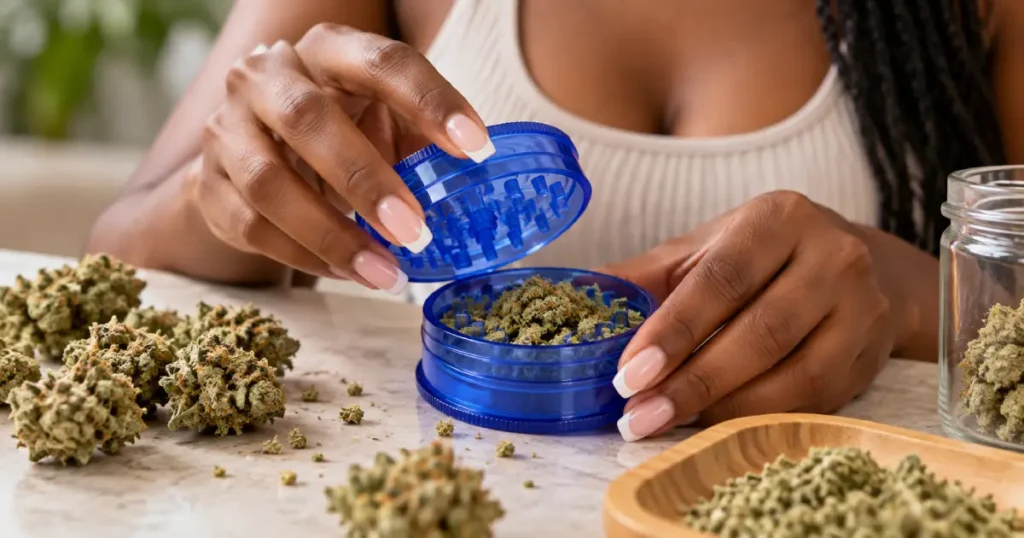
A good weed grinder is one of the simplest tools you can add to your cannabis setup. It takes whole cannabis buds and breaks them into smaller, more consistent pieces, making flower easier to roll, pack, or prepare for a dry-herb vaporizer.
But there is a little more to grinding cannabis than throwing a nug into a grinder and twisting.
How finely should you grind your flower? Should you remove the stems first? Why does flower sometimes get stuck between the teeth? And what is the powder that collects at the bottom of a four-piece grinder?
Learning how to grind weed properly can help you get a more consistent texture while avoiding common problems such as pulverized flower, clogged grinder teeth, and unevenly packed joints or bowls.
In this guide, you’ll learn how a cannabis grinder works, how to use one step by step, how grind size changes depending on what you’re preparing, how to clean your grinder, and what separates the best weed grinders from inexpensive options.
What Is a Weed Grinder?
A weed grinder, also called an herb grinder, cannabis grinder, or bud grinder, is a small device used to break dried cannabis flower into smaller pieces.
Most manual grinders consist of two circular sections containing interlocking teeth. When you rotate the sections in opposite directions, those teeth cut and break apart the flower.
More advanced grinders include additional chambers.
A typical four-piece grinder contains:
- Lid: The removable top section, usually containing grinding teeth.
- Grinding chamber: The area where you place cannabis flower before grinding.
- Collection chamber: The compartment where ground flower falls after passing through holes beneath the teeth.
- Kief catcher: A lower compartment designed to collect fine particles that pass through a screen.
Kief is the loose collection of resinous trichome material separated from cannabis flower. Trichomes are tiny glandular structures on the plant that contain cannabinoids and aromatic compounds.
You don’t need a four-piece model to grind flower successfully. A basic two-piece grinder can perform the primary job just fine.
Why Grind Cannabis Flower?
Technically, you can pull cannabis flower apart with your fingers.
A grinder simply makes it easier to create relatively uniform pieces.
That consistency can be particularly useful when preparing flower for joints, pipes, bongs, or dry-herb vaporizers.
More Consistent Pieces
Breaking a bud apart by hand can leave you with a mixture of large chunks and tiny fragments.
A grinder distributes the flower more evenly.
That makes it easier to control how tightly you pack a bowl, joint, or vaporizer chamber.
Easier Joint Rolling
Large chunks of flower can make a joint difficult to shape.
They can create lumps, puncture thin rolling paper, and leave inconsistent spaces throughout the roll.
Ground flower is easier to distribute from one end of the paper to the other.
Better Airflow
Air needs space to move through cannabis when you smoke or vaporize flower.
Packing large, dense pieces together can restrict that airflow. At the opposite extreme, pulverizing flower into powder and packing it tightly can also restrict airflow.
The goal is usually a loose, relatively uniform grind rather than the finest grind possible.
Less Handling
Breaking sticky cannabis apart with your fingers transfers some plant material and resin onto your hands.
A grinder reduces how much direct handling is required.
That also keeps preparation cleaner and faster.
How to Use a Weed Grinder: Step-by-Step Instructions
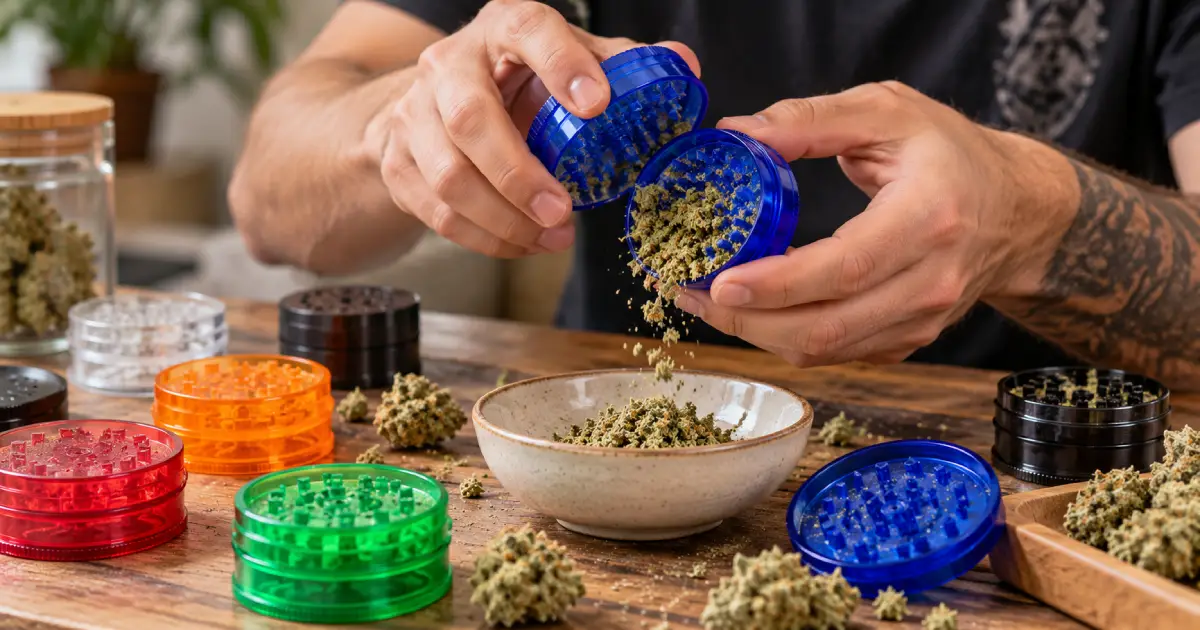
If you’re learning how to use a grinder for the first time, don’t overcomplicate it. A manual grinder requires only a few basic steps.
Step 1: Check Your Flower
Start with the amount of cannabis you plan to prepare.
Look over the flower and remove obvious seeds or large, hard stems. Small stems running through the flower aren’t always worth picking out individually, but thick stems won’t grind well and aren’t something you need to put through the teeth.
If you have a particularly large bud, gently separate it into smaller pieces first.
You don’t need to crush it with your fingers.
The pieces only need to be small enough to fit comfortably between the grinder’s teeth.
Step 2: Remove the Grinder Lid
Open the top grinding chamber.
Check that the teeth are reasonably clean and can move freely. If your grinder is coated with sticky plant material and barely turns, clean it before forcing it.
Forcing a jammed grinder can damage the teeth, threads, or other components.
Step 3: Place Flower Between the Teeth
Distribute the pieces of cannabis around the grinding chamber.
Try placing them between the teeth rather than directly over the center.
Many manual grinders have a central magnet or pivot point. Cannabis sitting directly on top of it may not break down as effectively.
Avoid filling every available space.
An overloaded grinder is harder to turn and often produces a less consistent result.
If you have more flower than comfortably fits, grind it in two batches.
Step 4: Replace the Lid
Put the lid back into position.
If your grinder uses magnets, you should feel the top settle into place.
Make sure nothing is preventing the lid from sitting correctly.
Step 5: Twist the Grinder
Hold the lower section securely and rotate the top.
You can rotate back and forth rather than aggressively spinning it in only one direction.
At first, you’ll probably feel resistance as the teeth begin breaking apart the flower.
Continue with steady turns.
With a multi-chamber grinder, sufficiently small pieces eventually fall through the holes into the collection chamber below.
You’ll usually notice that the grinder becomes easier to turn once most of the flower has passed through.
There’s no universal number of rotations required. Around 10 turns is commonly suggested, but flower density, moisture level, grinder design, tooth shape, and your desired texture all affect the result.
Instead of counting rotations exactly, pay attention to resistance and texture.
Step 6: Open the Collection Chamber
If you have a three- or four-piece grinder, unscrew the chamber beneath the grinding section.
Your ground flower should be sitting inside.
With a two-piece grinder, simply remove the lid and collect the flower from around the teeth.
Look at the consistency before using it.
Ideally, you’ll have small, loose pieces rather than large chunks or powder.
Step 7: Use or Store the Ground Flower
Transfer the amount you need to your rolling paper, bowl, or compatible dry-herb vaporizer.
If you grind more than you’re using immediately, place the remaining flower in an appropriate sealed storage container.
Grinding dramatically increases the exposed surface area of the flower, so grinding only what you need at the time is a simple approach if maintaining the condition of your remaining whole buds matters to you.
How Fine Should You Grind Weed?
One of the most overlooked parts of learning how to grind weed is understanding that there isn’t one perfect consistency for every application.
The ideal texture depends on what you’re preparing.
For Joints and Pre-Rolled Cones
Aim for a medium, fluffy grind.
The pieces should be small enough to spread evenly across the paper but not so fine that they resemble powder.
Very large chunks can make rolling difficult.
Extremely fine flower can become densely packed, potentially reducing airflow through the joint.
Consistency matters more than making the flower extremely fine.
For Pipes and Bongs
A medium-to-coarse grind generally makes packing straightforward.
You want pieces small enough to distribute evenly but large enough that loose flower isn’t immediately pulled through a large bowl opening.
Avoid compressing the flower excessively.
A densely packed bowl can restrict airflow.
For Dry-Herb Vaporizers
Dry-herb vaporizers heat cannabis flower without intentionally burning it.
The ideal grind varies by device.
Many vaporizers work well with a medium or medium-fine grind because the smaller particles create more exposed surface area. However, grinding flower into a powder may cause airflow problems or allow tiny particles to move through certain devices.
Follow your vaporizer manufacturer’s instructions whenever they specify a grind consistency or packing method.
For Cannabis Infusions
If you’re preparing flower for a recipe or infusion, you generally don’t need to pulverize it.
A coarse grind can make plant material easier to strain later.
Remember that grinding itself does not activate cannabis compounds for cooking. Recipes involving cannabis flower typically include additional preparation steps, which are separate from grinding.
Can You Grind Weed Too Fine?
Yes.
A common beginner mistake is assuming finer always means better.
It doesn’t.
If cannabis becomes powdery, the particles can pack together tightly.
That may interfere with airflow in some smoking or vaporizing setups and can make flower more difficult to handle.
Over-grinding may also push more fine plant and trichome material through a grinder screen.
For most everyday flower preparation, stop once the pieces are relatively uniform and easy to handle.
You’re grinding cannabis, not turning it into flour.
What Is Kief in a Weed Grinder?
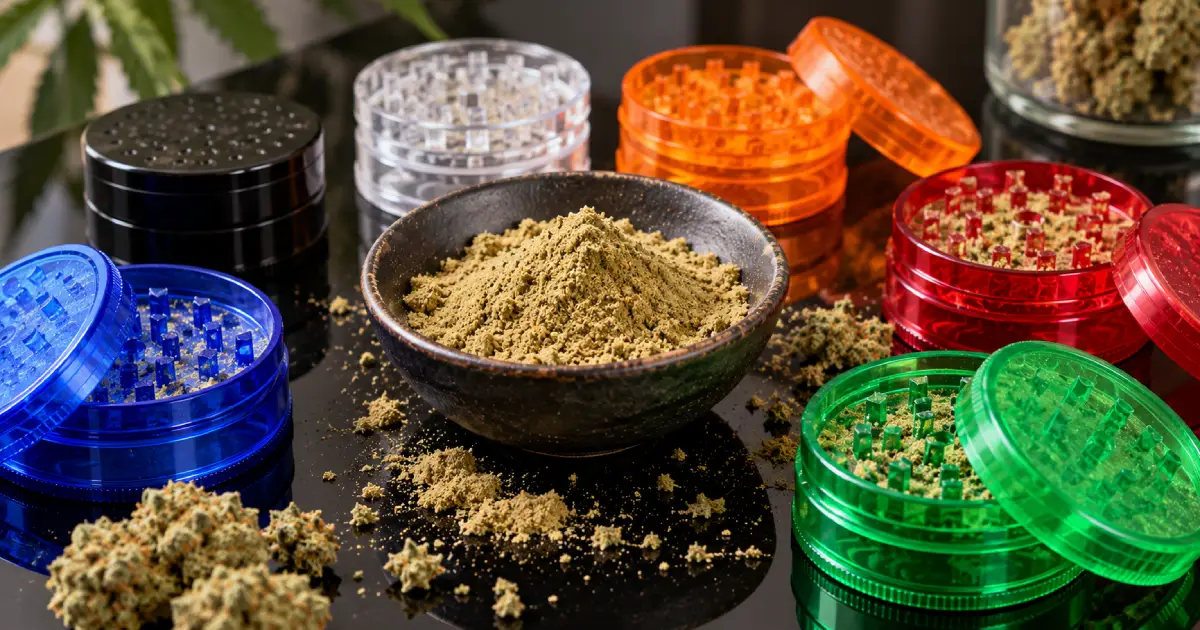
If you own a four-piece weed grinder, you’ve probably noticed a fine powder accumulating in the bottom compartment.
That’s commonly called kief.
Cannabis flowers are covered with structures called trichomes. These tiny glands contain many of the cannabinoids and aromatic compounds associated with cannabis.
As flower moves through a grinder, some trichome material naturally separates from the plant.
A four-piece grinder places a fine screen beneath the flower chamber. Small particles can pass through this screen and gradually collect in the bottom chamber.
That compartment is therefore called the kief catcher.
Kief can contain concentrated cannabinoid-rich plant material compared with ordinary ground flower, so don’t assume it has the same potency as the flower from which it came.
You also don’t have to collect kief.
Some people prefer simple two- or three-piece grinders because they want the fine material to remain mixed with their ground flower.
Two-Piece vs. Three-Piece vs. Four-Piece Weed Grinders
When shopping for the best weed grinders, you’ll encounter several designs.
None is automatically right for everyone.
Two-Piece Grinders
These are the simplest.
You get a top and bottom section containing teeth. Place the flower inside, twist, and remove the ground material from between the teeth.
Advantages: compact, simple, inexpensive, and easy to carry.
Disadvantages: no separate collection chamber or kief catcher.
Three-Piece Grinders
A three-piece grinder adds a chamber below the grinding teeth.
Small pieces fall through holes and collect below, making the ground flower easier to retrieve.
This is a useful middle ground if you want convenient collection without a separate kief compartment.
Four-Piece Grinders
Four-piece grinders add another level containing a fine screen and bottom collection compartment.
This is one of the most popular designs because it separates ground flower from some of the finer material.
The tradeoff is additional size, more threads, and more surfaces to clean.
What Are the Best Weed Grinders Made From?
Construction material can influence weight, durability, maintenance, and price.
Aluminum
Aluminum grinders are extremely common.
A well-made aluminum grinder can be relatively light while remaining durable enough for regular use.
Quality matters, though. Look for clean machining, sturdy teeth, smoothly operating threads, and a finish intended for the product’s use.
Stainless Steel
Stainless steel grinders tend to be heavier.
They can also be very durable, making them appealing if you want a grinder designed for long-term use.
Their main drawbacks are generally weight and cost.
Plastic
Plastic grinders are inexpensive and lightweight.
They’re useful as simple or temporary options, but durability varies considerably.
Inspect a plastic grinder regularly and replace it if teeth, surfaces, or other components become damaged.
Wood
Wooden grinders offer a different appearance and feel.
Their designs vary, and cleaning can require more care because you generally don’t want to soak unfinished wood in cleaning solutions.
Follow the manufacturer’s maintenance recommendations.
How to Choose the Best Weed Grinder
The best weed grinders aren’t necessarily the largest or most expensive.
Look for practical features that fit how you use cannabis flower.
Sharp, Well-Spaced Teeth
The teeth should break flower apart efficiently without requiring excessive force.
Look at their placement as well.
Good spacing allows the flower to move around the chamber instead of becoming trapped in one location.
Smooth Threads
If you’re buying a multi-piece grinder, inspect how easily the chambers screw together.
Poorly machined threads can become difficult to open, especially after sticky residue accumulates.
Appropriate Size
A small grinder may be ideal if you prepare only small quantities or want something portable.
A larger grinder provides more room if you regularly grind larger amounts.
Don’t automatically choose the biggest option.
Choose the capacity you’ll actually use.
Useful Collection Chamber
A deep collection chamber can make retrieving flower easier.
Some grinders also include a small tool for moving ground flower or collecting fine material.
Kief Screen
If collecting kief matters to you, choose a four-piece model with a well-made screen.
If it doesn’t, a simpler grinder may be more convenient.
Solid Construction
Check that the teeth feel secure, the lid aligns correctly, and moving parts don’t scrape against each other unexpectedly.
A grinder is a simple device. Good manufacturing matters more than unnecessary features.
Common Weed Grinder Mistakes
Knowing what not to do can make using a grinder much easier.
Overfilling the Chamber
Stuffing the grinder completely full makes it difficult for the teeth to move.
Use smaller batches instead.
Grinding Large Stems
Remove thick stems before grinding.
They don’t break apart like flower and can interfere with the teeth.
Forcing a Stuck Grinder
If your grinder suddenly becomes difficult to rotate, don’t immediately apply maximum force.
Open it and inspect the teeth.
Sticky flower or compressed plant material may be blocking movement.
Grinding for Too Long
Once you’ve reached the consistency you need, stop.
More rotations aren’t automatically better.
Ignoring Maintenance
Cannabis flower contains naturally sticky resinous material.
Over time, residue can build up on teeth, screens, threads, and chamber walls.
A grinder that once moved easily may gradually become difficult to turn.
That’s your sign that maintenance is overdue.
How to Clean a Weed Grinder
Cleaning methods depend partly on grinder material, so always check the manufacturer’s instructions first.
Start with the least aggressive approach.
Step 1: Empty the Grinder
Remove loose flower from each chamber.
A small, clean brush can help dislodge particles from teeth and corners.
Step 2: Disassemble It
Separate all removable chambers.
Be careful with fine screens, which can be easier to damage than solid metal sections.
Step 3: Brush Away Loose Material
Use a small soft brush to remove dry particles.
Pay particular attention to:
- Teeth
- Threads
- Holes
- Screens
- Chamber edges
Regular brushing can reduce how often a deeper cleaning is required.
Step 4: Follow Material-Specific Cleaning Instructions
Many unpainted metal grinders can tolerate cleaning methods that would be inappropriate for wood, some plastics, or certain coated surfaces.
Isopropyl alcohol is commonly used for cleaning compatible metal cannabis accessories, but don’t assume every grinder can be soaked in it.
Check manufacturer guidance first.
Step 5: Rinse When Appropriate
If the grinder material and cleaning method permit rinsing, remove cleaning residue thoroughly.
Step 6: Let Everything Dry Completely
Do not immediately reassemble a wet grinder.
Allow every section to dry before adding cannabis flower.
Why Is My Weed Grinder Stuck?
A stuck grinder doesn’t necessarily mean it’s broken.
The most common culprit is accumulated sticky plant residue.
Inspect the threads first.
Residue around threaded sections can essentially glue chambers together.
If the lid itself won’t rotate, inspect the teeth for compressed flower.
Regular cleaning helps prevent both problems.
Avoid using excessive force or tools that could deform the grinder.
If parts remain stuck, consult the manufacturer’s cleaning or troubleshooting recommendations for that specific material.
Should You Put Your Weed Grinder in the Freezer?
You’ll sometimes see recommendations to freeze a grinder before cleaning it.
Cooling sticky residue may temporarily make some material more brittle and easier to brush away.
However, this isn’t necessary for routine maintenance, and materials, coatings, magnets, and grinder construction differ.
Following the manufacturer’s cleaning directions is a safer general rule than applying the same DIY technique to every grinder.
How to Grind Weed Without a Grinder
What happens if you have flower but your grinder isn’t available?
Use Clean Fingers
For a small amount of flower, gently pulling a bud apart by hand is the simplest alternative.
Wash and dry your hands first.
Remove large stems, then separate the flower into similarly sized pieces.
It won’t be as uniform as a good grinder, but it requires no additional equipment.
Use Clean Scissors and a Small Container
Place cannabis flower inside a clean, dry small glass or container and carefully snip it with clean scissors.
This gives you greater control over texture than tearing the flower apart by hand.
Stop when you reach the consistency you need.
Use a Clean Knife and Cutting Surface
A clean, sharp kitchen knife can also break flower into smaller pieces.
Work carefully on a clean cutting surface and keep your fingers away from the blade.
Mechanical appliances such as coffee grinders can pulverize flower extremely quickly and may become coated in sticky residue, so they are usually unnecessary for small quantities.
For regular flower preparation, a purpose-built weed grinder is generally simpler.
Weed Grinder FAQs
How many times should you turn a weed grinder?
There is no exact number.
Roughly 10 rotations is a common starting point with manual grinders, but flower density, moisture, grinder design, and desired texture matter more than counting turns.
Stop when the cannabis reaches an appropriate consistency.
Should you remove stems before grinding weed?
Remove thick stems.
Small stems may remain inside individual pieces of flower, but large stems can interfere with grinding and don’t need to be placed in the grinder.
Why won’t my grinder turn?
The chamber may be overloaded, flower may be compressed between the teeth, or sticky residue may have accumulated.
Empty the grinder and inspect it rather than forcing it.
Is a four-piece grinder better than a two-piece grinder?
Not necessarily.
A four-piece grinder provides separate flower and kief chambers, while a two-piece grinder is simpler and more portable.
Choose according to the features you actually want.
Does grinding weed make it stronger?
Grinding doesn’t increase the amount of THC originally present in your flower.
It changes the physical size and distribution of the plant material.
A more uniform grind may change how conveniently or consistently flower works in a particular device or preparation method, but a grinder doesn’t manufacture additional cannabinoids.
Should weed be ground into powder?
Usually not.
Powder-like cannabis can become densely packed and may restrict airflow.
A loose, consistent grind is more useful for many common applications.
Can you grind wet cannabis?
A normal weed grinder is intended for properly dried cannabis flower.
Excessively moist or sticky material can clog the teeth and make the grinder difficult to operate.
How often should you clean a weed grinder?
There’s no universal schedule.
Clean it when residue begins interfering with movement, screens become clogged, threads become sticky, or old plant material accumulates.
Light brushing between deeper cleanings can help.
A Note on Cannabis Safety and U.S. Laws
A weed grinder is only a preparation tool. Grinding flower does not eliminate the health risks associated with cannabis use.
THC, or tetrahydrocannabinol, is the primary intoxicating cannabinoid associated with cannabis. THC can impair attention, reaction time, coordination, memory, and decision-making.
Avoid driving or operating machinery while impaired.
Smoking cannabis also exposes the lungs to smoke. The Centers for Disease Control and Prevention states that smoked cannabis can harm lung tissue and contains many of the same toxins and irritants found in tobacco smoke.
Keep cannabis and cannabis accessories securely stored away from children and pets.
You should also check the laws where you live before purchasing, possessing, or using cannabis. State cannabis laws vary substantially across the United States, while marijuana remains federally controlled as of September 2026. A federal rulemaking process concerning marijuana’s scheduling has been ongoing, so current federal and state rules should be checked rather than assuming legality based on another state’s laws.
Final Thoughts: Getting the Most From Your Weed Grinder
Learning how to grind weed properly takes only a few minutes.
Break oversized buds into manageable pieces, remove thick stems, avoid overloading the chamber, and use steady rotations until you have an even consistency. Most importantly, match your grind to what you’re preparing rather than automatically grinding everything as finely as possible.
The right grinder can make the process quicker and more consistent, but you don’t need an overly complicated device. The best weed grinders combine solid construction, effective teeth, smooth operation, easy cleaning, and a size that fits how much flower you normally prepare.
Keep yours clean, don’t force it when it becomes stuck, and it can remain a useful part of your cannabis setup for a long time.
If you’re exploring cannabis flower and related products, Buy My Weed USA is a trusted online marijuana store in the US where you can discover a wide selection of cannabis products and find options that suit your preferences. Explore our available selection and make informed choices based on your needs. Always purchase and use cannabis responsibly and in accordance with applicable laws.
References
Leafly. (September 16, 2022). What Is a Marijuana Grinder & How Do You Use It? Available at: https://www.leafly.com/learn/consume/smoke/what-is-grinder
Weedmaps. (February 22, 2026). What Is a Weed Grinder and How Does It Work? Available at: https://weedmaps.com/learn/products-and-how-to-consume/what-is-a-grinder
Weedmaps. (February 22, 2026). How to Grind Weed Without a Grinder. Available at: https://weedmaps.com/learn/products-and-how-to-consume/grind-weed-without-grinder
