
Uncategorized
How to Make THC Syrup: A DIY Guide
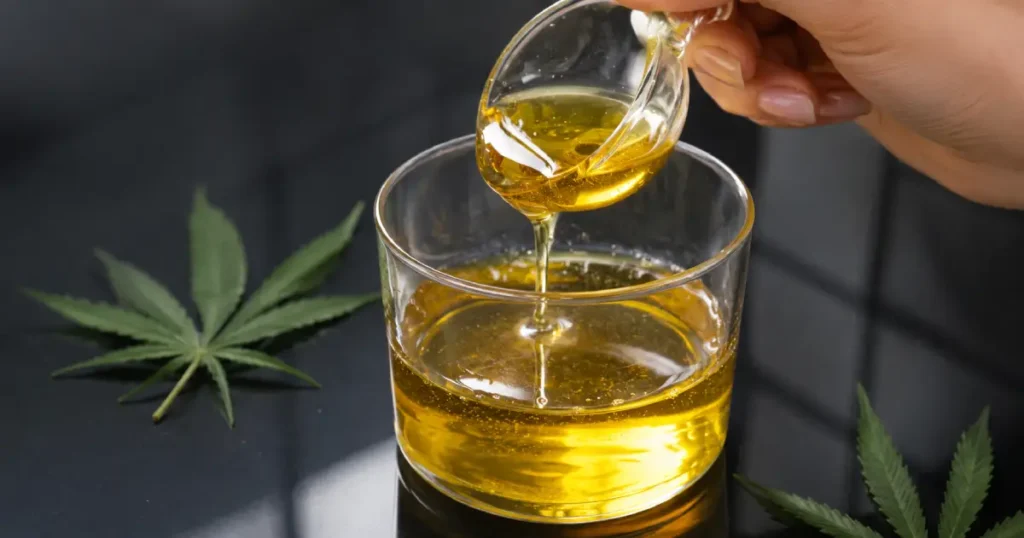
Aug
THC syrup gives you another way to use cannabis without smoking or vaping. Sweet, versatile, and easy to portion, this cannabis-infused liquid can be added to certain foods and non-alcoholic drinks or taken in a measured serving on its own.
But making good THC syrup involves more than mixing cannabis with sugar and water.
Cannabinoids such as THC do not dissolve readily in water. You also need to understand decarboxylation, infusion, temperature control, and approximate potency if you want your homemade cannabis syrup to be reasonably consistent.
This guide walks you through the basics, including how THC syrup works, how to prepare cannabis flower, how to estimate potency, why vegetable glycerin is commonly used, and how to avoid some of the most common DIY mistakes.
We’ll also explain the difference between weed syrup and cannabis oil. That’s especially important if you arrived here searching for how to make weed oil or how to make cannabis oil, because these products aren’t interchangeable.
Before you begin, remember that cannabis laws vary considerably across the United States. Check your state and local laws concerning cannabis possession, home preparation, and consumption.
What Is THC Syrup?
THC syrup is a sweet liquid containing tetrahydrocannabinol (THC), the primary cannabinoid responsible for cannabis’s intoxicating effects.
You may also hear it called:
- Cannabis syrup
- Weed syrup
- THC simple syrup
- Cannabis-infused syrup
- Canna syrup
Despite the word “syrup,” this isn’t the same thing as prescription cough syrup or products containing codeine. Cannabis syrup is simply a sweetened cannabis preparation designed for oral consumption.
Commercial formulas vary considerably. Some use cannabis extracts or concentrates, while homemade versions commonly begin with cannabis flower.
The main challenge is chemistry.
THC is lipophilic, meaning it has a stronger affinity for fats and oils than water. Simply dropping cannabis into sugar water isn’t an efficient way to create a predictable THC beverage.
That’s one reason homemade recipes often incorporate an additional ingredient such as food-grade vegetable glycerin or an emulsifier. An emulsifier helps substances that normally separate remain dispersed more evenly throughout a mixture.
Even then, homemade THC syrup should not be assumed to have the laboratory-level consistency of a professionally manufactured and tested product.
How Does THC Syrup Work?
When THC syrup is swallowed, THC is processed differently than when cannabis is inhaled.
After oral consumption, THC travels through your digestive system before undergoing metabolism in the liver. One important metabolite produced by this process is 11-hydroxy-THC.
That difference helps explain why orally consumed cannabis can feel different from inhaled cannabis.
It also means you shouldn’t expect immediate results.
The Centers for Disease Control and Prevention (CDC) states that edible cannabis products can take approximately 30 minutes to two hours to produce intoxicating effects. Effects can also last longer than expected, and the potency of edible products can be difficult to determine.
Those characteristics make patience particularly important with homemade cannabis syrup.
Taking another serving because you “don’t feel anything yet” can result in consuming much more THC than intended.
THC Syrup vs. Cannabis Oil: What’s the Difference?
Although people sometimes use the terms loosely, THC syrup and cannabis oil are different preparations.
Cannabis syrup generally contains water, sugar or another sweetener, cannabis-derived cannabinoids, and ingredients designed to improve texture or dispersion.
Cannabis oil uses an oil-based carrier, such as coconut or MCT oil, to hold cannabinoids.
That distinction matters for anyone searching how to make weed oil or how to make cannabis oil.
Cannabinoids have limited water solubility, while THC has an affinity for lipid-based materials. As a result, cannabis oil is normally created by infusing cannabinoids into a suitable carrier oil rather than a sugar-and-water syrup.
You can use cannabis oil as an ingredient in certain edible preparations, but pouring ordinary infused oil into simple syrup generally creates separation rather than a uniform finished product.
This guide focuses specifically on a water-and-sugar-based THC syrup.
Why Decarboxylation Matters
If you’re starting with cannabis flower, one of the most important steps happens before you make the syrup.
It’s called decarboxylation, or “decarbing.”
Raw cannabis primarily contains tetrahydrocannabinolic acid (THCA) rather than large quantities of neutral THC. Heating causes THCA to lose a carboxyl group and convert into THC.
Scientific research confirms that temperature and heating time affect cannabinoid decarboxylation. Excessive temperatures or prolonged heating can also result in losses of neutral cannabinoids.
In other words, more heat isn’t automatically better.
A Simple Home Decarboxylation Method
For a basic home preparation:
- Preheat your oven to approximately 240°F.
- Break the cannabis flower into small pieces rather than grinding it into a fine powder.
- Spread it evenly over a parchment-lined baking sheet.
- Heat it for approximately 30–40 minutes.
- Remove it and allow it to cool.
Home ovens can fluctuate significantly in temperature, so these numbers should be considered practical guidelines rather than laboratory conditions.
The finished cannabis will typically look drier and somewhat darker.
Avoid burning it.
Research into cannabinoid decarboxylation shows that the process depends on both time and temperature, which is another reason to use controlled heat rather than simply turning your oven as high as possible.
How to Make THC Syrup at Home
Once your cannabis has been decarboxylated, you can prepare the syrup.
This recipe produces a straightforward homemade weed syrup without requiring complicated equipment.
Ingredients
You’ll need:
Cannabis flower: About 3.5 grams of decarboxylated flower. Starting with a modest quantity makes estimating and controlling the finished batch easier.
Granulated sugar: 2 cups. Sugar provides the syrup’s sweetness and body.
Water: 1 cup.
Food-grade vegetable glycerin: 1–2 tablespoons. Vegetable glycerin is a clear, slightly sweet liquid commonly used in food preparations. It can improve the syrup’s texture and help with dispersion, although it does not make THC truly water-soluble.
Optional flavoring: A small amount of food-grade vanilla, lemon, mint, berry, or another flavoring can help mask some of the herbal taste.
You’ll also need a saucepan, spoon, fine-mesh strainer or cheesecloth, baking sheet, parchment paper, and clean glass storage container.
Step 1: Decarboxylate Your Cannabis
Use the decarboxylation process described above.
This step converts much of the THCA in the flower into THC, making the cannabis more appropriate for an orally consumed preparation.
Don’t skip it if you’re using ordinary dried cannabis flower.
Step 2: Make the Simple Syrup
Add one cup of water and two cups of sugar to a saucepan.
Warm the mixture over medium heat while stirring.
Once the sugar has completely dissolved, reduce the heat. You want a controlled simmer rather than an aggressive boil.
At this stage, you’ve essentially created a concentrated simple syrup, which is a mixture of dissolved sugar and water.
Step 3: Add the Decarboxylated Cannabis
Add the prepared cannabis flower to the warm syrup.
Stir gently so the plant material is distributed throughout the mixture.
Reduce the heat and allow it to simmer gently for approximately 20–30 minutes, stirring occasionally.
Avoid scorching the sugar or boiling the mixture aggressively.
Temperature control matters because prolonged exposure to excessive heat can degrade cannabinoids.
Step 4: Add Vegetable Glycerin
Stir in one to two tablespoons of food-grade vegetable glycerin.
Continue warming the mixture gently for another five to ten minutes while stirring frequently.
The glycerin helps give the finished product a thicker, smoother consistency.
Some recipes describe glycerin as if it magically makes THC completely water-soluble. That’s an oversimplification. Homemade preparations remain mixtures whose cannabinoid distribution can vary.
Step 5: Strain the Syrup
Remove the saucepan from the heat and let it cool enough to handle safely.
Place a fine-mesh strainer or cheesecloth over a clean container and slowly pour the syrup through it.
Strain out the cannabis plant material.
Avoid excessive squeezing if you want a cleaner-tasting syrup because forcing fine plant particles through the filter can increase bitterness and sediment.
Step 6: Cool and Store
Allow your cannabis syrup to cool.
Transfer it into a clean, tightly sealed glass bottle or jar and refrigerate it promptly.
Clearly label the container:
CONTAINS THC — FOR ADULT USE ONLY
Also consider including the preparation date and your estimated potency.
Most importantly, keep the container locked away from children and pets. The CDC specifically recommends keeping cannabis products in a locked, childproof container out of children’s and pets’ reach and sight.

How Strong Is Homemade THC Syrup?
This is where many THC syrup recipes become misleading.
You cannot determine the exact potency of homemade syrup without analytical testing.
You can, however, make a rough theoretical estimate if you know the THC percentage of your cannabis.
Suppose you’re using:
3.5 grams of cannabis at 20% THC
First convert grams into milligrams:
3.5 × 1,000 = 3,500 mg cannabis
Then multiply that number by the stated THC percentage:
3,500 × 0.20 = 700 mg potential THC
But that does not mean your bottle will contain exactly 700 mg of usable THC.
The calculation represents a theoretical starting point. Decarboxylation efficiency, extraction efficiency, material lost during straining, heating conditions, cannabinoid degradation, and uneven distribution can all reduce or alter the actual amount.
A more useful formula is:
Cannabis weight in grams × 1,000 × THC percentage = theoretical maximum THC
If you make two cups of finished syrup from flower theoretically containing 700 mg THC, dividing 700 by the finished volume gives you a rough upper-bound estimate.
It is not a laboratory result.
The CDC notes that determining THC strength in edible cannabis products can be difficult and that potency can be unknown or inaccurate. Homemade products add even more variables.
For that reason, don’t treat a DIY potency calculator as proof that every teaspoon contains an exact dose.
How to Make THC Syrup More Consistent
Consistency is one of the hardest parts of making cannabis syrup at home.
You may notice that your finished syrup develops layers, sediment, or differences in texture after sitting in the refrigerator.
That’s not necessarily surprising.
Cannabinoids don’t naturally behave like sugar when added to water. Sugar readily dissolves; THC does not.
To improve consistency, keep your ingredient ratios and preparation process the same from batch to batch. Stir thoroughly during preparation and again before measuring a serving if separation occurs.
For people who prioritize predictable potency, regulated products that have undergone laboratory testing provide information that homemade preparations generally cannot.
Making THC Syrup With Cannabis Concentrate
Some experienced consumers make cannabis syrup with concentrates rather than flower.
This can reduce the grassy flavor and plant sediment associated with flower.
However, concentrates can contain dramatically higher cannabinoid concentrations than flower, making small measuring errors much more significant.
You also need to determine whether the concentrate has already been decarboxylated.
Some cannabis distillates contain active THC and may not require the same decarboxylation process as raw flower or THCA-rich concentrates.
Because concentrate composition and potency vary substantially by product, follow the manufacturer’s information and use products with clearly stated laboratory results where legally available.
Avoid attempting DIY solvent-based cannabis extraction at home. Working with volatile solvents can create serious fire, explosion, and contamination hazards.
THC Syrup vs. THC Tincture
Another product commonly confused with THC syrup is a cannabis tincture.
A tincture is a concentrated liquid cannabis preparation, traditionally made using alcohol as the extraction medium, although commercial products may use other carriers.
THC syrup, in contrast, is designed around a sweet syrup base.
Their textures and ingredient profiles are therefore quite different.
A tincture tends to be thin and concentrated, while cannabis syrup is thicker and sweeter.
This distinction matters when following recipes because replacing one with the other can significantly change both potency and consistency.
How to Use Cannabis Syrup
THC syrup is versatile, but remember that adding it to another food or beverage doesn’t eliminate its intoxicating effects.
Depending on its formulation, cannabis syrup may be incorporated into non-alcoholic beverages, drizzled over suitable foods, or measured separately.
Avoid mixing cannabis with alcohol if your goal is to minimize impairment. The CDC notes that using cannabis together with other substances, including alcohol, can increase impairment.
Whatever method you choose, measure rather than free-pouring.
That is particularly important with homemade syrup because sweetness can make it easy to forget that you’re consuming an intoxicating cannabis product.
Common THC Syrup Mistakes
Skipping Decarboxylation
Putting raw cannabis directly into syrup isn’t equivalent to using properly decarboxylated flower.
If you’re starting with flower, decarboxylation is a fundamental part of preparing THC-focused edibles.
Using Excessive Heat
Higher temperatures don’t necessarily create a stronger infusion.
Scientific research has demonstrated losses of neutral cannabinoids under elevated temperatures and prolonged heating conditions.
Keep your heat controlled.
Assuming Homemade Potency Is Exact
A mathematical estimate is useful for planning, but it isn’t a substitute for laboratory analysis.
Treat calculated potency as approximate.
Taking Another Serving Too Soon
This is one of the most important mistakes to avoid.
Orally consumed cannabis can take considerably longer to produce effects than inhaled cannabis. The CDC reports that effects from edibles may take 30 minutes to two hours to appear.
Consuming additional THC during that delay can result in unexpectedly intense effects.
Forgetting to Stir
Homemade syrup may not remain perfectly homogeneous, meaning identical throughout.
If the mixture has separated, one portion could potentially contain a different concentration than another.
Mix thoroughly before measuring.
Leaving THC Syrup Unlabeled
A bottle of sweet syrup can easily be mistaken for ordinary food.
Label it clearly and store it securely.
How Should You Store THC Syrup?
Homemade cannabis syrup contains water, so storage should be treated seriously.
Keep it in a clean, airtight container in the refrigerator rather than leaving it indefinitely at room temperature.
Using a smaller container can reduce repeated exposure to air and contaminants.
Check the syrup before using it. If you notice mold, fermentation, an unusual odor, unexpected bubbling, or another sign of spoilage, discard it.
Don’t rely on THC or sugar to make an improperly stored homemade product safe indefinitely.
Light and heat are also poor storage conditions for cannabinoids, so an opaque or dark glass container kept refrigerated is preferable to leaving your syrup on a sunny countertop.
Always keep cannabis products inaccessible to children and pets.
How Long Does THC Syrup Take to Work?
There’s no universal answer.
Oral cannabis products can take 30 minutes to two hours to produce noticeable intoxicating effects, according to the CDC.
Timing and intensity can vary based on factors such as the amount consumed, THC concentration, previous cannabis experience, whether you’ve recently eaten, and individual biology.
Effects may also last longer than you expect.
That’s why comparing THC syrup directly with smoking or vaping can lead to dosing mistakes.
Inhaled cannabis tends to produce effects much faster. Swallowed THC has to travel through your digestive system and undergo metabolism before its full effects become apparent.
Can You Make Weed Syrup Without Sugar?
Potentially, but replacing sugar changes more than sweetness.
Sugar contributes substantially to traditional syrup’s viscosity, mouthfeel, and preservation characteristics.
Sugar-free alternatives therefore require different formulation considerations.
Simply replacing two cups of sugar with an equal amount of an artificial sweetener may produce a watery product rather than syrup.
If sugar intake is a concern, a commercially formulated cannabis beverage or another accurately labeled product may be easier to portion than experimenting with a homemade sugar-free syrup.
What If Your THC Syrup Separates?
Some separation can occur because you’re trying to distribute oil-friendly cannabinoids through a predominantly water-based product.
If your syrup separates during storage, stir or shake it thoroughly before measuring.
Persistent separation can indicate that the formulation isn’t sufficiently stable.
Adding more cannabis isn’t the solution.
Commercial manufacturers can use specialized emulsification technology to produce more stable cannabinoid beverages. These systems are difficult to replicate accurately with ordinary kitchen equipment.
This is another reason homemade THC syrup should be viewed as a DIY preparation rather than an exact duplicate of a professionally manufactured product.
Is THC Syrup the Same as “Lean”?
No.
Although THC syrup may sometimes be marketed using slang associated with “lean,” cannabis syrup should not be confused with prescription cough syrup containing substances such as codeine.
They are pharmacologically different products.
Avoid combining cannabis syrup with prescription drugs, alcohol, or other intoxicating substances without appropriate medical guidance.
Is Homemade THC Syrup Safe?
Cannabis isn’t risk-free simply because you consume it instead of smoking it.
The CDC lists possible signs of consuming too much cannabis as extreme confusion, anxiety, paranoia, panic, rapid heart rate, hallucinations or delusions, increased blood pressure, and severe nausea or vomiting.
Fatal overdose caused solely by cannabis is considered unlikely, but serious adverse reactions and injuries can still occur.
If someone has consumed cannabis and develops concerning symptoms, contact Poison Control in the United States at 1-800-222-1222. Call 911 for an emergency.
Never drive after consuming intoxicating cannabis. Cannabis can impair reaction time, coordination, decision-making, and perception.
Is THC Syrup Legal in the United States?
Cannabis law in the United States is complicated because federal and state rules can differ.
As of 2026, the federal cannabis regulatory landscape continues to evolve. The Department of Justice announced in April 2026 that certain FDA-approved marijuana products and marijuana products subject to qualifying state-issued medical licenses were placed in Schedule III, while a broader administrative process concerning marijuana rescheduling continued.
That does not mean all marijuana possession, manufacture, sale, or interstate transportation is automatically legal nationwide.
State laws remain highly important.
Depending on where you live, recreational cannabis may be permitted, restricted to medical use, or prohibited. Home preparation and possession limits can also differ.
Before making THC syrup, check the current laws that apply in your state and municipality.
THC Syrup FAQ
Does THC dissolve in simple syrup?
Not efficiently on its own. THC has poor water solubility, which is why homemade syrup formulations often use ingredients intended to improve dispersion. This also explains why homemade mixtures may separate.
Can you make THC syrup from cannabis flower?
Yes. Cannabis flower is commonly used for homemade syrup, but it should generally be decarboxylated first if your goal is a THC-containing oral preparation.
Can you make cannabis syrup from cannabis oil?
It’s possible to formulate cannabinoid beverages from oil-based extracts, but simply mixing ordinary cannabis oil into sugar water can result in separation. Stable commercial beverages often rely on specialized emulsification techniques.
How do you calculate THC syrup potency?
Multiply the cannabis weight in grams by 1,000 and then by its THC percentage to calculate a theoretical maximum.
For example:
3.5 g × 1,000 × 20% = 700 mg theoretical THC
Actual finished potency will generally differ because of decarboxylation, extraction, processing, and measurement losses.
How much THC syrup should you use?
There isn’t one appropriate amount for everyone because products and individual responses vary.
If you choose to consume THC, use a clearly measured amount and account for the delayed onset associated with orally consumed cannabis. Homemade potency estimates shouldn’t be treated as exact laboratory measurements.
How long does weed syrup last?
There isn’t a universal shelf life for homemade weed syrup. Ingredients, sanitation, sugar concentration, storage temperature, and contamination can all affect spoilage.
Refrigerate homemade syrup in a clean, sealed container and discard it if you see or smell signs of spoilage.
Is THC syrup stronger than edibles?
THC syrup is itself an orally consumed cannabis product, so “stronger” depends primarily on the amount of THC consumed rather than whether it comes in syrup, weed gummy, THC chocolate, brownie, or another form.
Always compare actual THC content when reliable labeling is available.
Is cannabis oil easier to make than THC syrup?
The processes are different. If you’re researching how to make cannabis oil, you’ll typically find recipes involving cannabinoid infusion into a fat-based carrier such as MCT or coconut oil.
THC syrup uses a water-and-sugar base and has the additional challenge of keeping cannabinoids adequately dispersed.
Final Thoughts: Making THC Syrup at Home
Learning how to make THC syrup comes down to understanding a few important principles: decarboxylate cannabis flower properly, control your temperatures, understand that THC doesn’t naturally dissolve well in water, and never assume homemade potency calculations are exact.
A straightforward recipe uses decarboxylated flower, water, sugar, and food-grade vegetable glycerin to produce a sweet cannabis syrup that can be measured and incorporated into suitable foods or non-alcoholic beverages.
The biggest challenge isn’t making something sweet. It’s achieving consistency.
That’s why careful measurement, thorough mixing, responsible storage, patience after consumption, and conservative assumptions about potency matter.
And if you came here wondering how to make weed oil or how to make cannabis oil, remember that cannabis oil and THC syrup aren’t the same thing. Oil uses a lipid-based carrier, while syrup relies primarily on water and sugar.
DIY preparations can be interesting for experienced adults living where cannabis use and home preparation are legal, but convenience and predictability matter too. If you’d rather skip the kitchen experiments, explore BuyMyWeedUSA.com to learn more about available cannabis products and find an option that better fits your preferences.
References
Rachel S. (2024, July 2). A Full Guide to THC Syrup. Available at: https://www.nuggmd.com/blog/a-full-guide-to-thc-syrup
What is THC Syrup & How Can You Make It At Home? [DIY Recipe]. (2026, March 09). Available at: https://www.verilife.com/learn/thc-syrup
